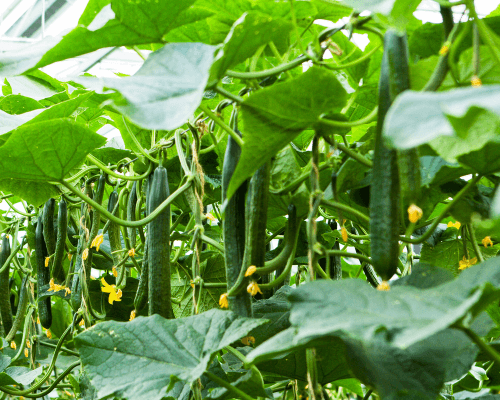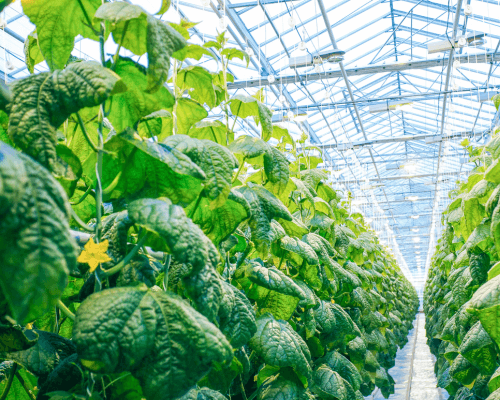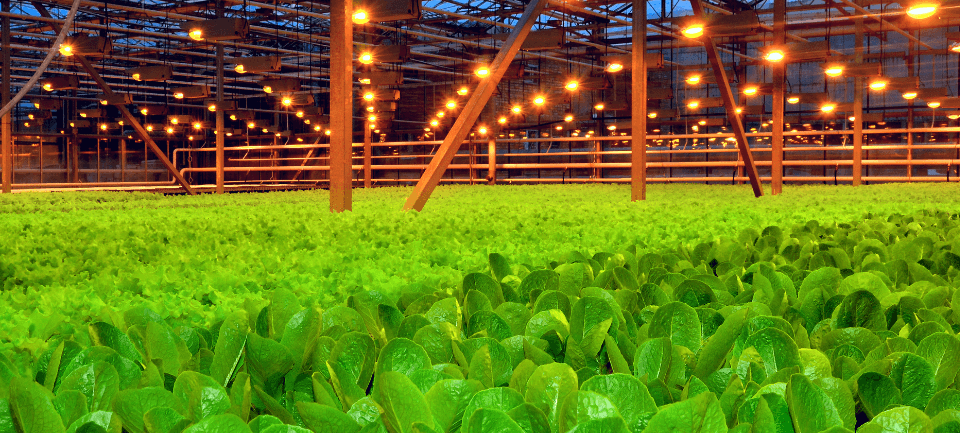

Applying a data-driven growing approach in greenhouses can be a solution to improve the quality of the final yield, the sustainability of operations, and increase labour efficiency. By embracing data-driven technologies in greenhouse horticulture, growers can optimise production, make more informed decisions, and become better prepared for future production and operational challenges.
Smart greenhouses can be considered as technologically advanced agricultural facilities that make use of automation, precision agriculture, and controlled environment techniques. This could be in either mid-tech or high-tech greenhouse facilities.
A smart greenhouse makes use of sensors and data analytics to optimize factors like temperature, humidity, and nutrient levels, creating an efficient crop growth environment.
Energy-efficient technologies, automation, and in the future, the utilization of machine learning during harvesting contribute to a reduced reliance on manual labour, which is challenging to find in many places around the world. The integration of IoT in smart greenhouses enables real-time monitoring and data-driven decision-making for increased productivity and resource management in the greenhouse. Many of these technologies and automation methods are already being used in Dutch greenhouses.
Case study – Autonomous Greenhouse Challenge: the future of growing with Greenhouse Climate Computers
To showcase what the future of greenhouse control looks like with making use of data, plant growing models, and artificial intelligence (AI) we want to share some insights of the Autonomous Greenhouse Challenge, a challenge organised by Wageningen University & Research (WUR) in the Netherlands with you.
This challenge is unique as it fosters the collaboration of AI engineers and computer sciences students to work closely together with horticulturists/plant scientists. Since the first edition of the Autonomous Greenhouse Challenge, which happened in 2018, four editions have taken place.
The goal of the autonomous greenhouse challenge is to determine how greenhouse growers around the world could use technology to increase plant production, quality, and profit without entering the greenhouse During each of the challenges, Wageningen University & Research provided the plants, greenhouse, data platform, standard sensors, and cameras. The selected teams, that went through a competitive online hackathon, needed to develop the machine learning and computer vision algorithms to grow the crops remotely and autonomously.
The team that can maximise net profit by using AI techniques to control the greenhouse climate and crop, while producing in the most sustainable way and implementing an effective AI strategy, wins the challenge. The past winners of this challenge actually outperformed the yield of experienced Dutch growers, while reducing the usage of energy.
The Autonomous Greenhouse challenge shows that integrating prediction models in a greenhouse climate computer will allow growers to produce more in a smarter way.
In 2026, Dutch and international teams consisting of scientists, professionals, and students will again participate in the fifth edition of the greenhouse challenge.
Copy the link of this article in 1 click:
Related Posts

About the Author: Yasmin