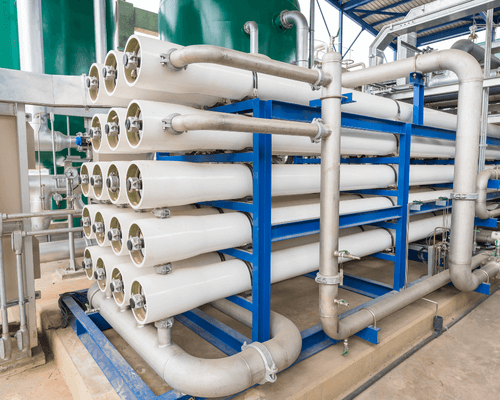
The usage of a commercial reverse osmosis unit
Most greenhouses have one or multiple rainwater collecting basins to gather water for use in the greenhouse. In situations where the rainwater basin is empty due to for example long periods of drought, greenhouse companies will need to switch to groundwater or river water to provide the crops with enough water. Therefore, reverse osmosis (RO) units are increasingly being installed in greenhouses worldwide to ensure a continuous water supply, even during
Reverse osmosis can increase the quality of water from a (deep) well, ditch, or rainwater to the desired standard. A general rule of thumb is that the cleaner the water entering the greenhouse, the lower the likelihood of accumulating undesirable substances in the greenhouse irrigation systems.
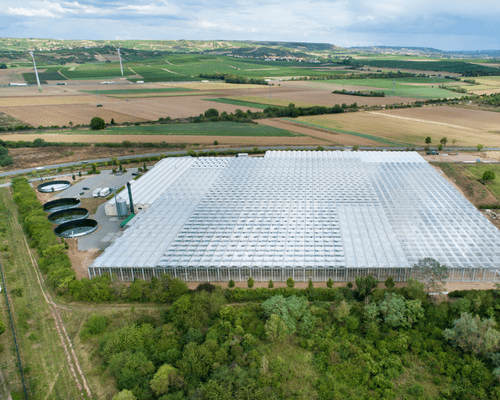
On the image above, water collecting basins can be seen (left side). However, occasions can occur when the collected water is not enough to fulfill the water requirements of the crops in the greenhouses. Ground water is then used as a secondary source of water but before it can be used, it needs to be cleaned/filtered with reverse osmosis to obtain safe and clean water in the greenhouse. Or to manage clean water
Using commercial reverse osmosis for sensitive crops:
Commercial reverse osmosis systems are also used to remove specific minerals from the water. Strawberries are very for example sensitive to silicon, which can result in reduced fruit quality when the concentration of silicon is too high. Therefore, for professional large scale strawberry producers, installing a commercial reverse osmosis unit (also called industrial RO systems) is recommended.
Copy the link of this article in 1 click:
Related Posts


About the Author: Yasmin