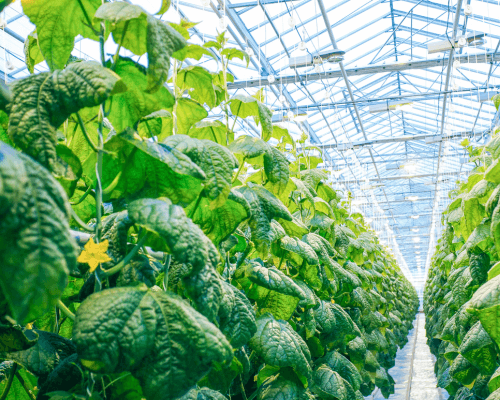
Dutch hydroponic greenhouses are renowned for their high production per ground area, as they are highly efficient. The Netherlands faces a labor shortage, high energy and gas prices, and limited land, so the greenhouses have evolved to be very efficient in terms of yield.
Below, 7 insights on operating a Dutch commercial hydroponics greenhouse are listed. This list provides an idea of the types of commercial hydroponics equipment and hydroponic supply needed to operate optimally 24/7.
1) Use climate control systems (with climate computers):
- Commercial hydroponics greenhouses are equipped with advanced climate control systems. This includes automated ventilation, heating, and cooling systems to maintain optimal temperature and humidity levels.
- Plants are living organisms that are very sensitive to environmental changes, so keeping the environment temperature and humidity stable is important.
- High-tech sensors and computerized controls enable precision in managing environmental conditions, ensuring crops to grow optimally year-round.
2) Understand the technical aspects of hydroponic growing systems:
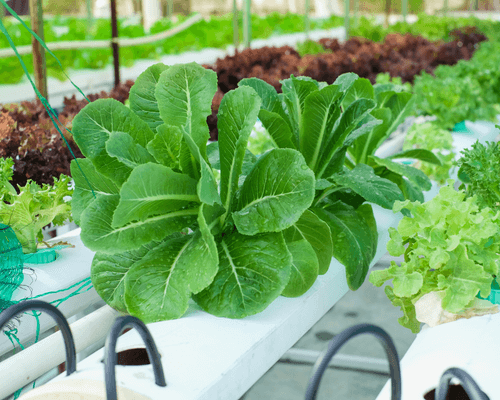
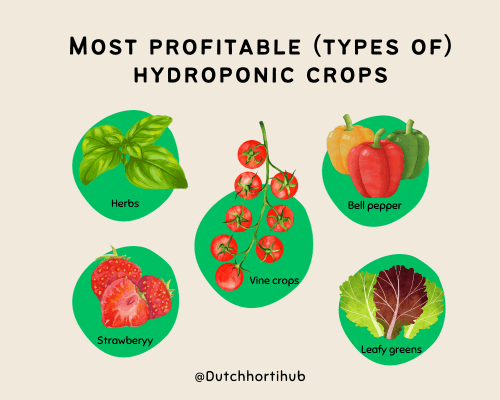
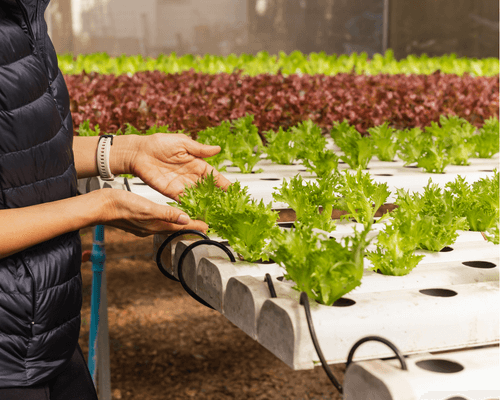
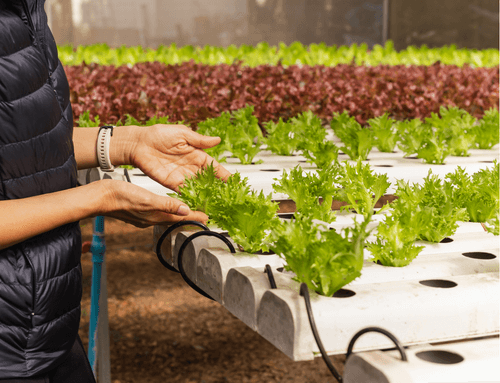
- Dutch greenhouses use hydroponic growing systems to grow crops and flowers. Nutrient film technique (NFT) for vine crops and strawberries and deep water culture (DWC) for lettuce production are commonly used. Choosing the right system meeting the specific needs of a crop, before starting is really important.
- Hydroponic systems systems provide plants with a precisely controlled nutrient solution, promoting faster growth, higher yields, and resource efficiency.
3) Apply a correct water and irrigation strategy:
- For crops to take up an optimal amount of nutrients, the pH and EC value of the irrigation solution needs to be correct. The crops will need to receive at the right moment water in a right quantity, otherwise the crops might suffer from drought stress.
Did you know:
- Growing crops in a hydroponic system is very efficient in terms of water usage? In an open field (without drip irrigation) the estimated amount of water that is needed to produce 1 kg of tomatoes is 100-300 liter. While in a Dutch advanced controlled glasshouses with CO2 and a closed hydroponic system it is just 15 liter water per kg tomatoes. When it is a closed greenhouse (without windows), the amount of water needed is just 4 liters!
- Water scarcity concerns are addressed with a hydroponic growing system through efficient water management systems, incorporating recycling and reuse practices.
- Dutch hydroponic greenhouses efficient irrigation technologies, such as drip irrigation or ebb and flow systems, help to promote precise and resource-conscious water distribution.
4) Boosting growth by installing plant lighting solutions:
- To compensate for insufficient natural sunlight during the day, Dutch commercial hydroponics greenhouses integrate efficient lighting solutions. Previously, HPS (High-Pressure Sodium) lights were used, but nowadays more LED grow lights are installed to reduce energy consumption of the greenhouse.
- LED Light spectrum and intensity can be tailored to specific crop requirements, maximizing photosynthesis and accelerating growth.
5) Install greenhouse hygiene sations and follow the best practices:
- In Dutch commercial hydroponics greenhouses, maintaining strict hygiene is the standard. Hygiene stations are often strategically placed at entry points to ensure that everyone, including personnel and visitors who are entering the greenhouse, do not take plant viruses and other plant diseases with them.
- Workers are often required to undergo hygiene procedures, such as foot baths and hand sanitization, to prevent the introduction and spread of diseases that can affect plants.
6) Use climate screens:
- Climate screens, also known as shade or energy screens, are essential components in Dutch commercial hydroponics greenhouses. These retractable screens are used to regulate light intensity and the temperature in the greenhouse.
- Climate screens contribute to creating optimal growing conditions and improving energy efficiency within the greenhouse.
They are particularly crucial in managing excess solar radiation during peak sunlight hours and in keeping heat inside the greenhouse during colder periods during the night
7) Use water filtration and drain water disinfection systems:
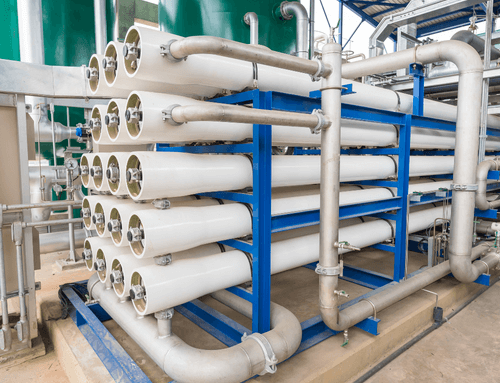
- To reduce the usage of water in greenhouses and potential pest outbreaks, Dutch commercial hydroponics greenhouses reuse water in the hydroponic systems by disinfecting it.
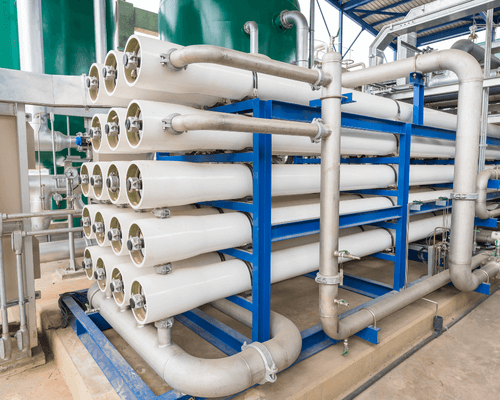
- Advanced water filtration systems, including sand filters and UV disinfection units, are commonly integrated to clean the drain water which have flown in and out of the hydroponic system. Without these systems, it won’t be possible to reuse the water safely, safeguarding plant health.
- These systems remove impurities and pathogens from the water, ensuring a clean and disease-free nutrient solution.
Copy the link of this article in 1 click:
Related Posts
About the Author: Yasmin

Passionate about translating scientific knowledge to solve real-life problems, Yasmin is the founder of Dutch Horti Hub and writes regularly about horticulture plant production and latest greenhouse horticulture trends on dutchhortihub.nl. She has a BSc. en MSc. in Plant Sciences from Wageningen University & Research, the leading agriculture university in the world. She specialises in both sustainable crop production and controlled environment agriculture (CEA).