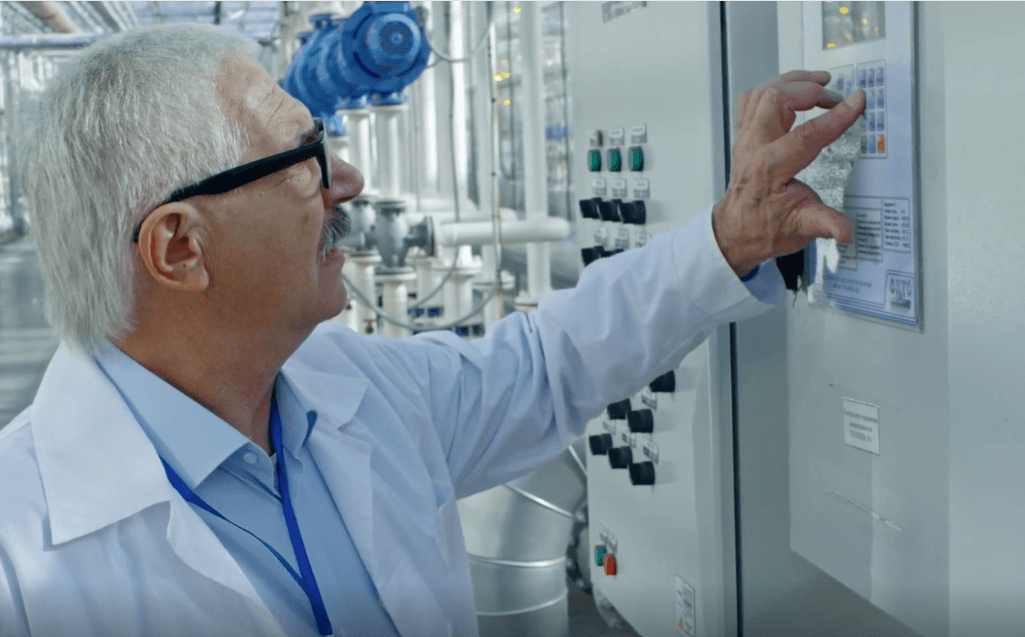
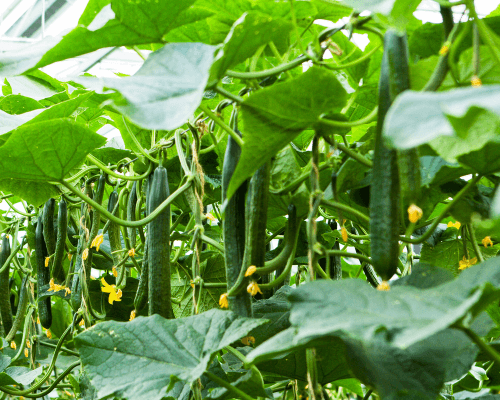
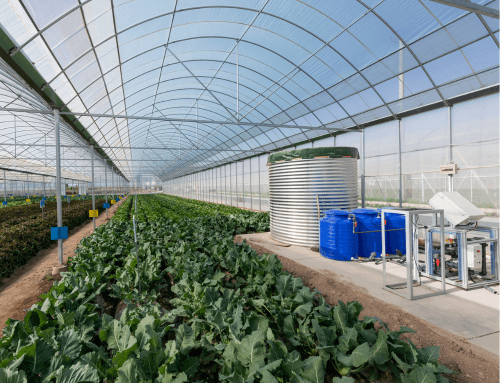
To answer the question, “How do greenhouses control climate?”, the answer for commercial greenhouses is often simple: they use a greenhouse climate control system. A greenhouse control system can help to regulate the indoor climate of small and big greenhouses.
Identifying the limiting growing factor in the growing environment
Identifying the limiting growing factor in the growing environment
With a greenhouse environmental control system, many of the important variables can be controlled to ensure an optimal growing condition for the crops. Creating an optimal growing environment for the plant involves identifying and optimizing the limiting factor in the greenhouse.
Understanding what the limiting factor is and what kind of impact the limiting factor has on the growing condition for the greenhouse crops is very important.
Greenhouse climate control systems optimize growing conditions by ensuring that all climate, nutrient, and crop growing conditions are optimal.
To illustrate what a limiting factor is, we provide the following example.
Imagine it is a sunny day with enough sunlight for the crops in the greenhouse. The humidity level is perfect, and the plants have enough nutrients to grow optimally.
However, as the windows have been opened and the plants have used a significant amount of CO₂ to grow, the CO₂ concentration in the greenhouse has dropped significantly and is around 400 ppm (parts per million).
We know that to allow a plant to photosynthesise at a high rate, 1000-1200 ppm CO₂ should be supplied. As there is plenty of sunlight, water/nutrients to drive photosynthesis but a lack of CO₂ in the greenhouse, CO₂ is the limiting factor in this example that prevents the plant from having a high photosynthesis rate, causing a reduction in the final yield at that moment.
A well programmed climate control system manages and improves the limiting factor, as that will improve the yield. When that certain factor is optimized, then the climate computer will proceed with optimizing the other limiting factors until all have reached their optimal value.
Of course, a good greenhouse program works based on weighing the cost of improving the limiting growing factor with the expected increase in income. In the following sections , we will be discussing controlling the temperature, humidity, cooling, lighting, and CO2 supply in the greenhouse.
Controlling temperature with a greenhouse climate controller
The temperature in the greenhouse is maintained with a climate computer using the principle that the temperature should be between a minimum temperature (lower than this temperature, heating will need to be turned on) and a maximum temperature (higher than this temperature, ventilation will need to occur to cool down the greenhouse environment).
Greenhouse temperature control with a greenhouse climate control computer automatizes this process.
These minimum and maximum temperatures are pre-determined by the grower, and the climate computer knows that.
Also, a deviation width/band is determined. It controls the extent of the reaction that the climate computer needs to take when the temperature is below or above the pre-set value and the deviation band.
Knowing how much the value deviates from the pre-set value is important. For example when the greenhouse temperature is just 3 degree Celsius above the preferred temperature greenhouse value, the opening in the roof should be less opened compared to if the average greenhouse temperature is 10 degrees Celsius above the growing optimum. In that case, the windows should be more open.
Flexible greenhouse climate control to improve plant growth and plant well-being
A very important feature of a good greenhouse climate computer is flexibility.
When the climate computer knows that it has been a sunny day with lots of hours of sunshine, it should allow the night temperature in the greenhouse to be slightly higher compared to an average day. As after a sunny day, a lot of sugars have been produced in the leaves of the plants.
The night temperature of that day should be slightly higher, to allow those extra sugars to be properly transferred out of the leaves to other parts of the plant at night.
To control the greenhouse temperature effectively, there should be flexible set points and daily environmental conditions should be taken into account.
Therefore, a good greenhouse climate control does more than merely maintaining the pre-set temperatures as well as possible
Did you know? A full-grown crop can actually tolerate short term temperature fluctuations quite well.
Research has shown that the growth (biomass increase) and development (changes in stages of the plant) of the most important greenhouse crops (tomato, cucumber, bell pepper) are actually determined by the mean of temperature of several days (long term) rather than the temperature of just 1 or 2 days (short term).
This provides the possibility to work with temperature integration in the long term. For example: crops will tolerate the compensation of a 24h temperature of 19°C if the temperature is 21°C the following day; to obtain a 24h temperature of 20°C.
This however, can not be done for extreme temperatures such as 30°C on one day and 10°C the other day.
Allowing a fluctuating temperature range in greenhouses saves energy
Modern greenhouse climate computers allow temperature integration, and this helps growers to save energy.
Strictly controlling the temperature in the greenhouse costs a lot of energy compare to letting the temperature to fluctuate a bit throughout the day.
Controlling the temperature strictly is under some conditions not necessarily (because the plant can tolerate it) and in this case allowing the temperature to fluctuate will benefit the grower in terms of saving energy costs.
Of course, the right balance between energy costs and additional yield will need to be found.
Copy the link of this article in 1 click:
Related Posts

About the Author: Yasmin