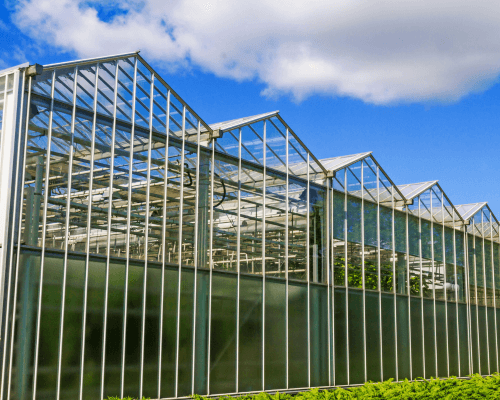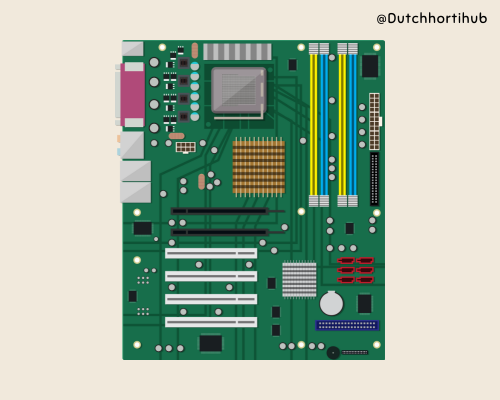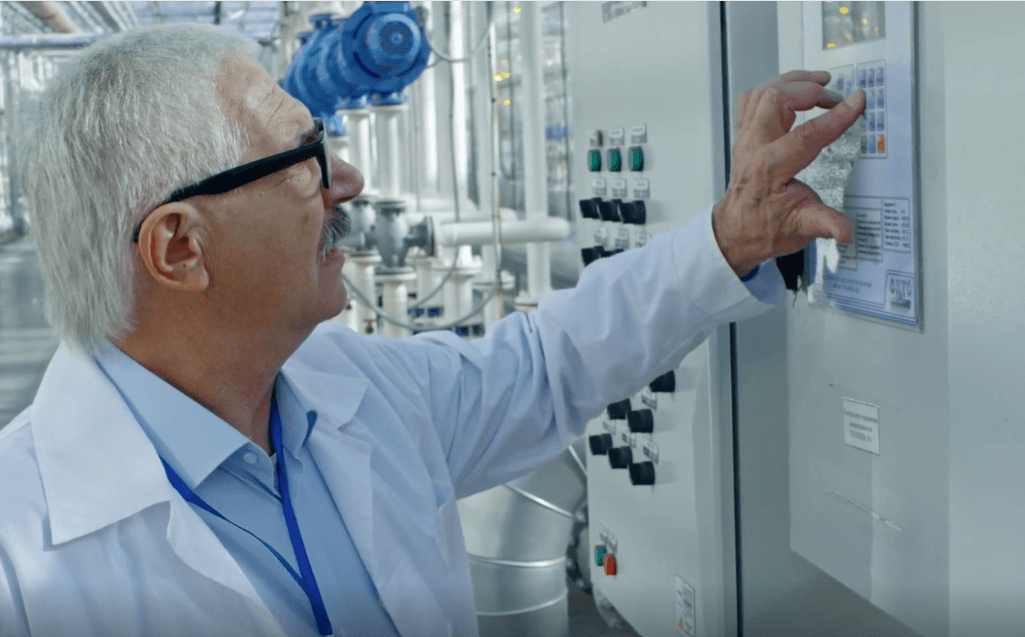
For a climate computer to make accurate predictions and decisions, it needs to be able to receive data from sensors inside and outside the greenhouse.
Measuring temperature, humidity, CO₂ and PAR
Besides temperature sensors, other greenhouse sensors should also be included to enable the climate computer to make the right control decisions. These include humidity sensors, CO₂ sensors, and Photosynthetically Active Radiation (PAR) sensors inside the greenhouse, as well as radiation sensors for measuring outdoor global radiation, an anemometer for measuring wind speed, and a wind direction sensor to determine the direction from which the wind is coming. The outdoor sensors are also referred as the ‘weather station’.
Controlling and measuring air humidity in greenhouses
The humidity in a greenhouse can be measured with a psychrometer and is connected to the greenhouse climate computer to assess the humidity and relative humidity in the greenhouse. The psychrometer measures the quantity of water vapour in the air. Having the correct humidity level is essential for creating optimal growing conditions for plants. When the humidity is too high, it can increase fungi and bacterial incidence, harming the crops or reducing evapotranspiration by plants, which then directly affects the photosynthesis rate.
When the air humidity is too low, it can lead to excessive moisture loss of the crops to the environment (decreased water use efficiency) and reduced plant growth.
How does the psychrometer for air humidity measurement work?
The principle of the psychrometer is based on the cooling effect of water evaporation. The meter consists of two parts: a dry bulb thermometer and a wet-bulb thermometer.
The dry bulb thermometer is a standard thermometer that measures the actual air temperature. The wet-bulb thermometer is covered with a wet cloth.
When air flows over the cloth, water will evaporate, causing the temperature to drop (evaporating costs energy). The lower the humidity is in the air, the greater the difference will be between the two temperatures. The difference in temperature is used to calculate the relative humidity in the air.
Measuring CO₂ with a greenhouse CO₂ meter
While CO₂ is also a greenhouse gas warming up the planet, plants require CO₂ to grow well and often, there is a lack of CO₂ in the greenhouse if the CO₂ level is not controlled. With a CO₂ meter, growers can determine when and how much CO₂ should be added. The CO₂ meter measures the CO₂ concentration in the greenhouse air. In greenhouses, the CO₂ level is expressed in parts per million (ppm). As the level of CO₂ in the greenhouse has to a certain extent a direct relationship with the photosynthesis rate of the crop, measuring and tracking the CO₂ level in the greenhouse with a CO₂ ppm meter is essential.
At the moment of writing, the CO₂ concentration in air is currently at 427 ppm (=atmospheric CO₂ concentration). For many greenhouse fruiting crops like tomatoes and peppers, increasing the greenhouse CO₂ level up to 2.5-3 times more than the atmospheric CO₂ concentration (in combination with sufficient light) will help the plant to increase the photosynthetic rate leading to higher biomass production.
Important: the greenhouse sensors should be protected!
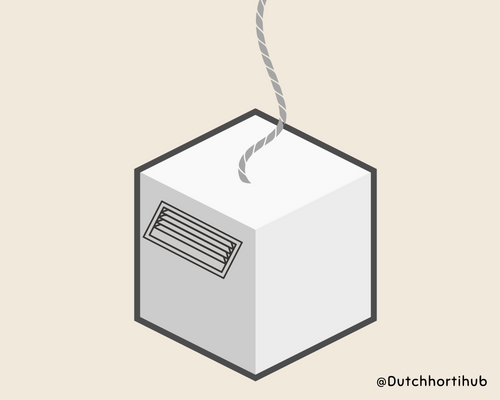
In each greenhouse compartment, the temperature sensor, humidity meter (measuring the actual humidity and the relative humidity) and CO₂ meter (when CO₂ is being supplied in the greenhouse), should be present in a protected ventilated box. In the greenhouse, those boxes are usually white and are hanging down from the ceiling. The ventilated metal box around these sensors protects the sensors against solar radiation and other radiation that might unintentionally heat up or influence the sensors.
How does the Greenhouse CO₂ sensor work?
CO₂ levels are commonly measured using a Non-Dispersive Infrared (NDIR) sensor, which gauges the amount of infrared light absorbed in the air. The absorbed infrared light is proportional to the concentration of CO₂ in the air.
Copy the link of this article in 1 click:
Related Posts


About the Author: Yasmin