
Greenhouse hydroponics systems
With the right technical resources and knowledge, working with hydroponic systems becomes very straight forward.
On this comprehensive page about hydroponic systems, you will read and learn about the principles behind hydroponics, how an indoor hydroponic system works and how to use greenhouse hydroponics to produce high-quality crops.
We will also address many frequently asked questions about hydroponics, such as how plants can be grown without soil, which growing substrate you should use for your hydroponic plants, the benefits of hydroponics, the challenges of hydroponics, and whether hydroponic tomatoes taste different when compared to soil-grown field tomatoes.
What is hydroponic growing, and how does it differ from traditional soil cultivation?
Hydroponic growing is a method of cultivating plants without soil, using nutrient-rich water solutions which directly delivers essential nutrients to plant roots.
This method provides better control over environmental factors, nutrient levels, and promotes faster and more efficient plant growth compared to traditional soil cultivation.
What can you grow hydroponically?
In the past, vegetables, fodder crops, cereals, fruits, flowers, and medicinal plants have been grown in hydroponic greenhouses. Even growing carrots hydroponically is possible.
Research and commercial greenhouses have shown that the crop yields in hydroponic greenhouses per area are higher than open agriculture yield per area.
In a (closed or semi-closed) greenhouse, the crops are, among other things, protected against unfavorable environmental conditions. Also, the nutrients are easily taken up in a hydroponic system, resulting in an increase in yield.
The yield in a hydroponic system can be further increased when artificial lighting is applied, and extra CO2 is introduced into the system.
Growing tomatoes indoors is particularly interesting, as in a mid-tech/high tech greenhouse environment, a yield of 40kg/m2 – 70kg/m2 is achievable. For comparison, the yield of open agriculture, usually won’t be more than 22kg/m2.
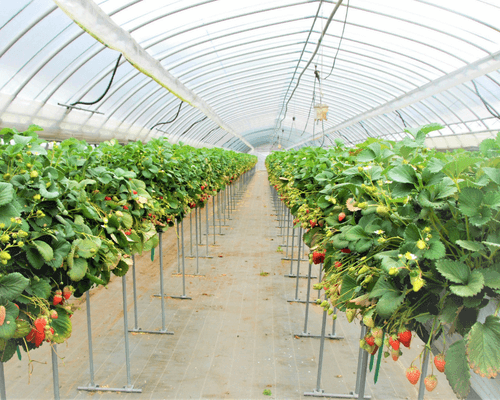
What are the key considerations for designing and operating a successful commercial hydroponic greenhouse?
Designing a successful commercial hydroponic greenhouse involves considering different factors before the greenhouse has been build, such as the location where the greenhouse will be build (hot/cold/dry/humid environment), whether there is budget for a climate control system and lighting solutions.
Incorporating proper infrastructure, efficient use of space, and trained workers & growers in the greenhouse are also very important for smoothly operating the greenhouse.
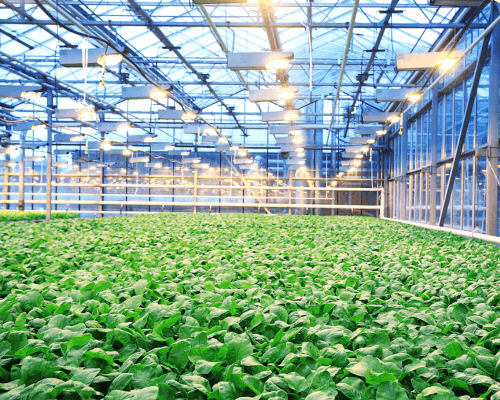
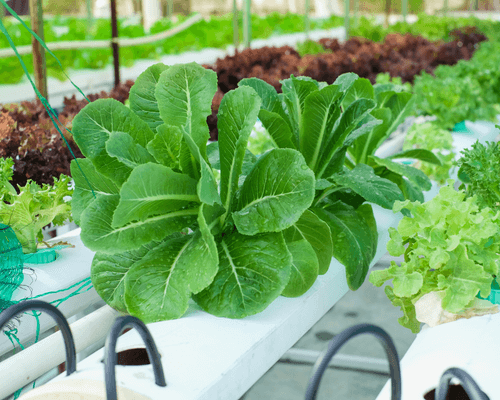
A must read introduction to hydroponics – What Is hydroponics and the principles behind It
What Is hydroponics? - introduction to hydroponics Hydroponics can be defined as a modern agriculture technique to[...]
How hard is hydroponic growing? The risks mapped out
How hard growing crops hydroponically, depends on factors such as the scale of the system, how professional the[...]
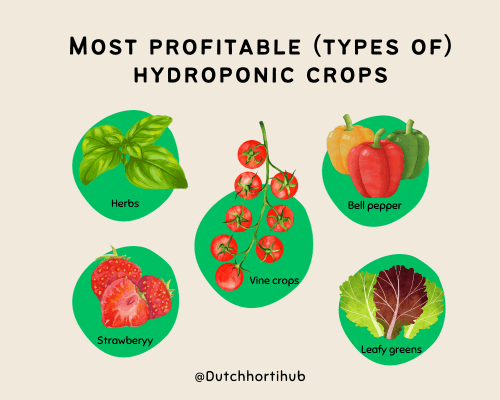
What are some of the most profitable plants to grow hydroponically in a greenhouse? + reasons
Choosing the right crop to grow in a greenhouse will determine the final profitability of your hydroponic business,[...]
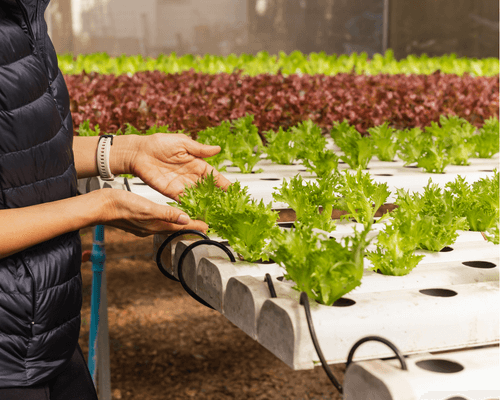
6 types of hydroponics growing systems
There is not just one fixed type of hydroponic system for greenhouse production, but multiple systems, each differing[...]
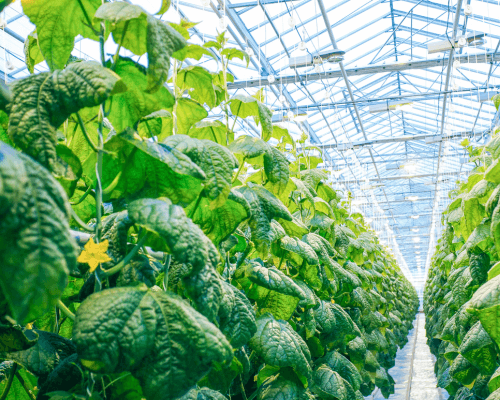
7 insights on how to grow more in a Dutch hydroponics greenhouse
Dutch hydroponic greenhouses are renowned for their high production per ground area, as they are highly efficient. The[...]