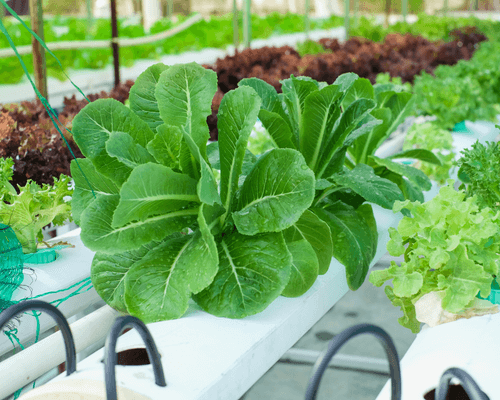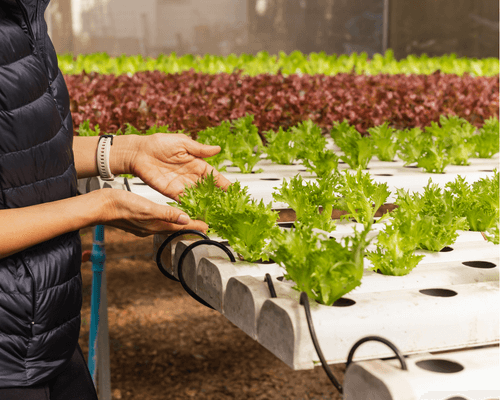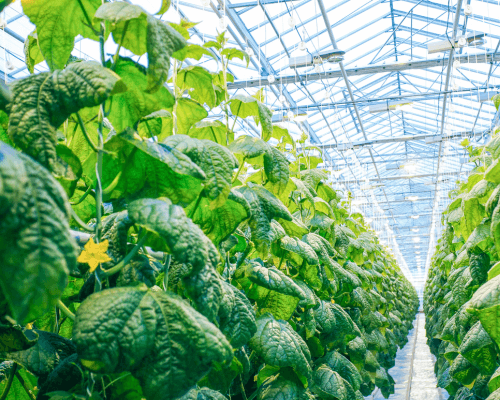
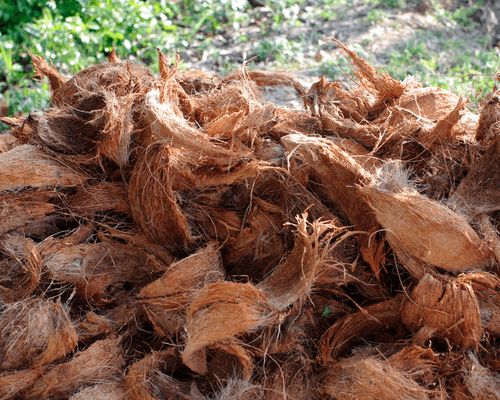
While hydroponics reduces the need for soil, a growing medium or substrate is still used to support plant roots and provide stability for the plants in a commercial hydroponic greenhouse. Common hydroponic substrates (hydroponic grow media) include hydroponic rockwool, hydroponic coconut coir and hydroponic perlite.
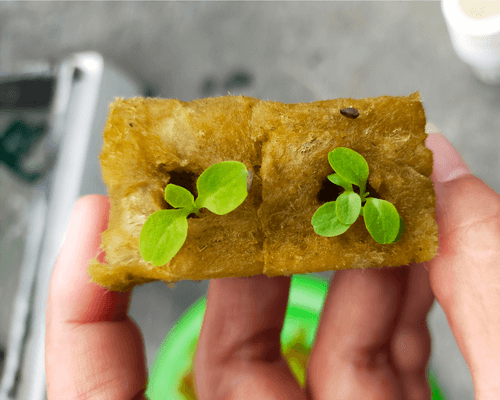
Hydroponic rockwool
Often, people ask what is rockwool made out of? Rockwool is obtained from the volcanic rock basalt or diabase. By heating this rock vigorously and swirling it around, threads are formed. Through further processing, mats of rockwool are eventually created.
A crucial difference between rockwool for insulation and growing substrate is that rockwool used for insulation in construction is water-repellent, while rockwool used for growing crops absorbs water.
The ability to absorb water is important, as it keeps the plant roots moistened and ensures that the roots can absorb enough water and nutrients for growth.
Rockwool as a growing medium comes in different forms and is widely used in greenhouses worldwide. A significant advantage is that rockwool cannot rot; however, it is important to monitor the pH with rockwool.
If the pH is too low, rockwool tends to lose its structure. In modern greenhouses, the pH of the solution is automatically regulated and adjusted.
Hydroponic rockwool is available in among others the following types:
- Rockwool cubes (for germinating seeds)
- Rockwool slabs (Rockwool cubes with young plants are placed on the slabs, and the roots grow through the block and into the slabs. The slabs are soaked with a nutrient solution).
Hydroponic coco coir
Did you know that coconut fiber can be used to grow plants? Coco fiber for growing plants is often called ‘coco coir’ and is widely used, as it helps the plant roots stay aerated throughout the growing cycle.
This ensures that the plant roots receive sufficient oxygen, which promotes the growth of the crop.
More plant based natural fibers are being used in a hydroponic system, as they are abundantly available in nature and they have unique properties such as being light weighted, relatively cheap and strong.
The biggest advantage of coco coir is that it is a natural product that is 100% degradable and has a lower carbon footprint. After the production season is over, the coco coir can be used to enrich neighboring fields for outdoor production.
A downside of coco coir is that the coconut fibers might come loose from the slab and damage the hydroponic system by causing blockages if the system doesn’t have a filter. The usage of coco coir also tends to colour the drainage water.
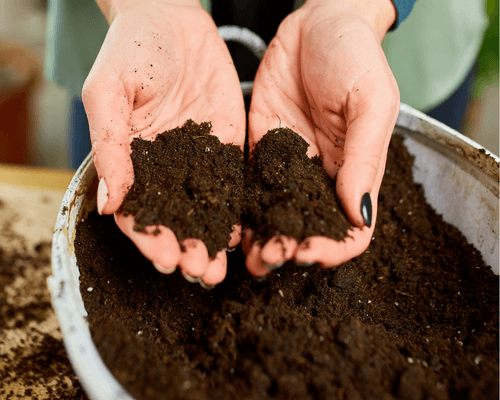
Hydroponic perlite
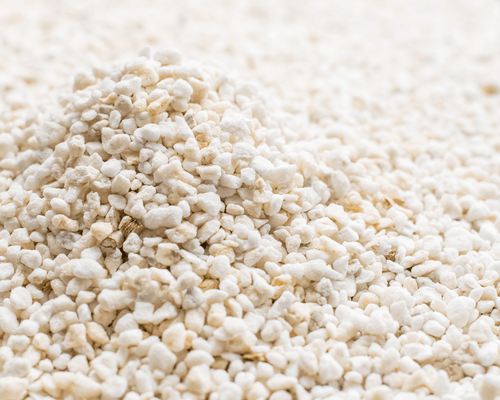
Hydroponic perlite is a volcanic mineral characterized by being lightweight and sterile. Perlite used for growing crops in a hydroponic system is valued for its aeration and drainage properties.
Perlite granule size differs, but often, they are around 2mm. The pH of perlite is around 5.6.
Hydroponic perlite fosters optimal root development, providing enough air in the root zone and can maintain a pH suitable for plant growth.
Perlite can be used as a growing medium in different systems such as the drip system and Ebb & Flow system. In some cases, perlite bags/perlite slabs can be reused by small-scale farmers after the plants are harvested. Perlite can be sterilised with hydrogen peroxide to kill plant pathogens.
Copy the link of this article in 1 click:
Related Posts

About the Author: Yasmin