
Greenhouse lighting
Supplemental lighting is used in greenhouses to promote plant growth, as sunlight throughout the day might not be enough to create an optimal growing environment for the crops. Indoor greenhouse with light is very common. It has been estimated that in the Netherlands, about 2000 ha of glass greenhouses use supplemental lighting for propagation and production purposes.
Light is crucial for greenhouse production, as it provides the energy for crops to perform photosynthesis: the process of converting light into chemical energy for plant growth and fruit forming. Understanding the topic light and plant is therefore crucial.
Using the right grow lights for plants can contribute to improved quality and yield of the final harvested product in Controlled Environment Agriculture (CEA). Understanding which types of plant grow lights are best suited for specific applications can help reduce operational energy costs associated with greenhouse lighting.
Also, knowing which types of plant grow light are the best to use, will help to reduce operational (energy) costs in greenhouse lighting.
Through articles on this website, you will find resources on the importance of lighting for plant growth, background information on wavelength of light for plants, grow lights for plants (differences between HPS lights, led grow lights, full spectrum lighting), short day & long day plants, greenhouse lighting and reasons to install grow lights for indoor plants. On this page, knowledge on the latest research outcomes of interlighting (intra/inter-canopy lighting) and more.
The importance of greenhouse lighting for plant growth
Besides temperature, air humidity and CO₂ concentration in the greenhouse, light is a major environmental factor which affect the production in the greenhouse enormously.
Low light intensity and low amount of light is a major problem and limiting production factor in northern regions in the world, such as Canada and European countries like the Netherlands, Sweden and Finland where there is often not enough sunlight for optimal crop production.
Measurements have shown that inside a greenhouse, the amount of sunlight entering is often 40-50% lower (!) than the outside environment. This reduction occurs due to reflection and absorption of light (photons) by the greenhouse infrastructure and glazing.
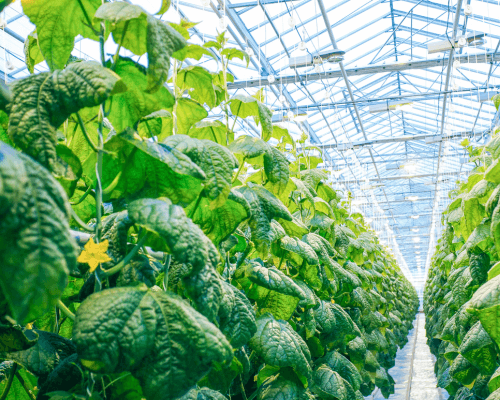
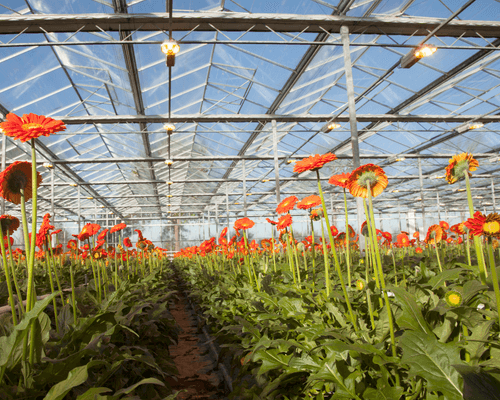
Why is supplemental lighting used in greenhouses?
Supplemental lighting is used in greenhouses to promote plant growth, as sunlight throughout the day might not be enough[...]
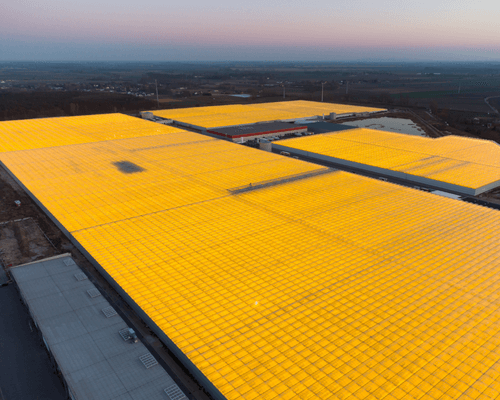
8 Examples on how supplementary grow lights are used for crops in Dutch greenhouses
Dutch horticulture lighting is widely utilised across a range of crops to enhance growth and increase yields in[...]
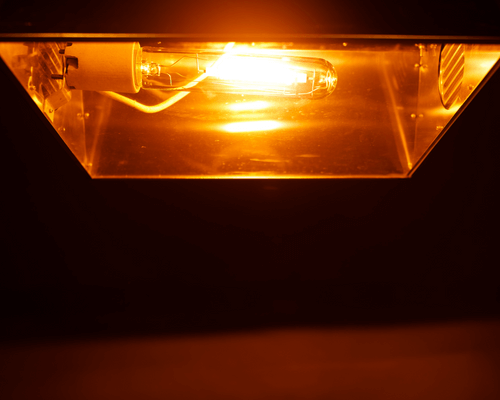
What is the difference between efficiency and efficacy of plant lights?
In the context of plant lighting in greenhouses, the terms "efficiency" and "efficacy" are crucial factors to consider[...]
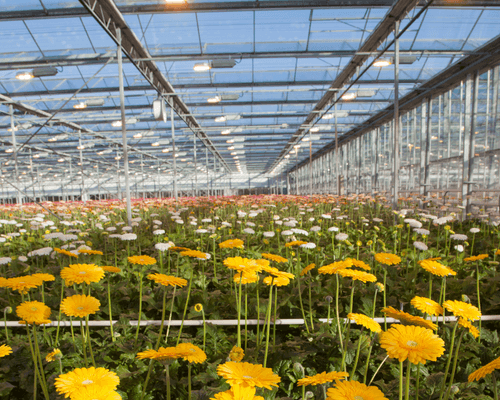
Top 3 Best practices for implementing greenhouse lighting
Implementing best practices for greenhouse lighting promotes uniform plant growth and optimizes light conditions for greenhouse crops. Below,[...]
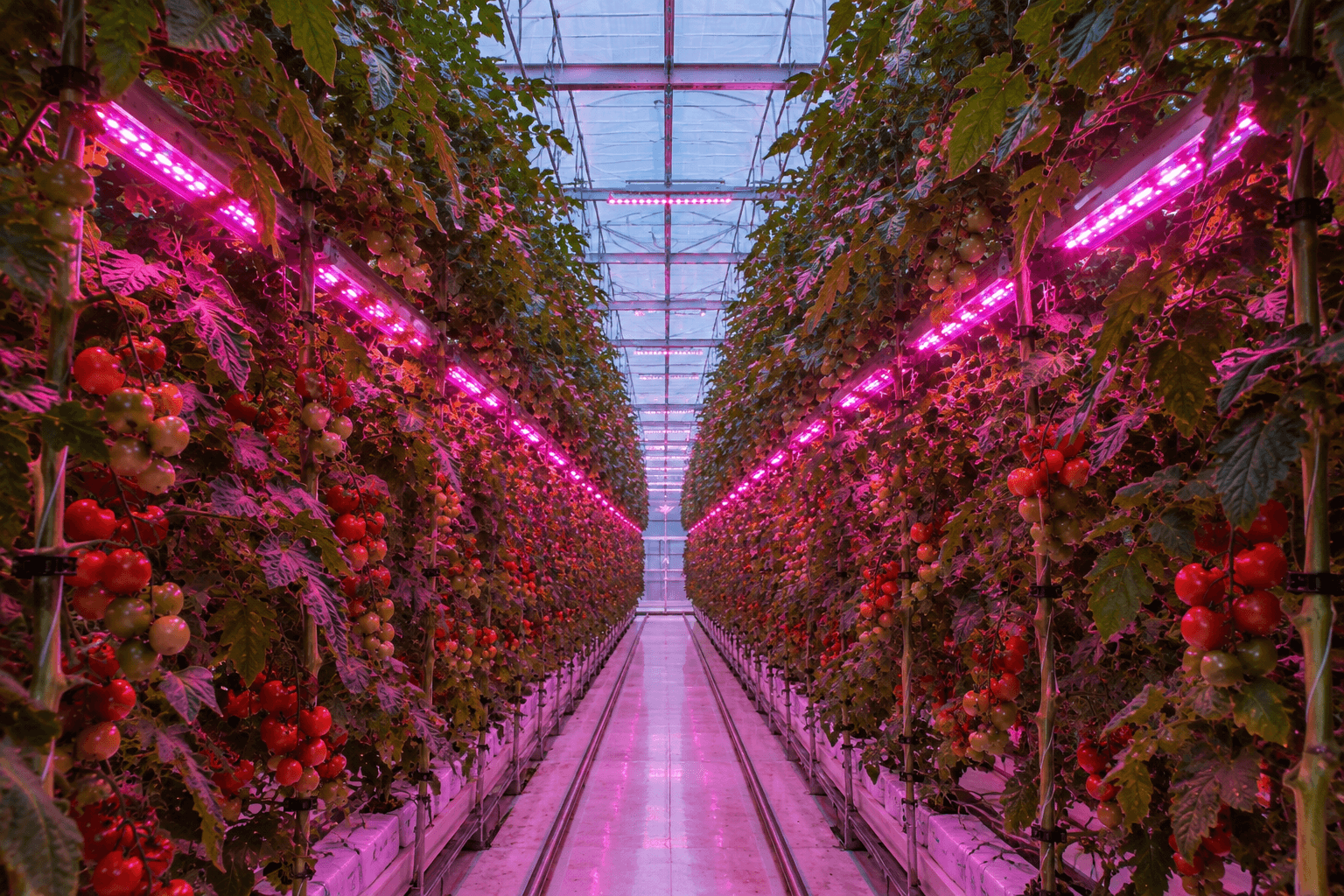
How intracanopy lighting can increase yield in greenhouses without increasing energy usage
Currently, when grow lamps for supplemental lighting are installed in greenhouses, they are placed above the plants. A[...]
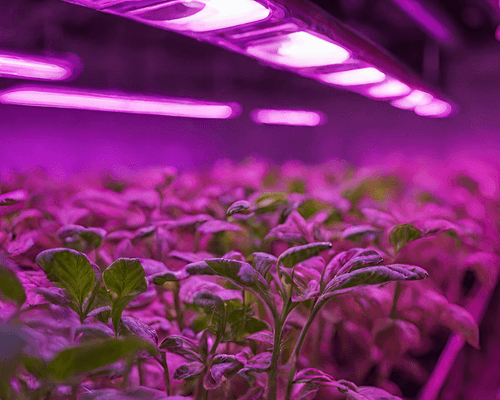
Short 2026 updates on grow lamps for greenhouses and vertical farms
Grow lamps for greenhouses Nowadays, when new high-tech greenhouses are designed and built around the world, LED[...]
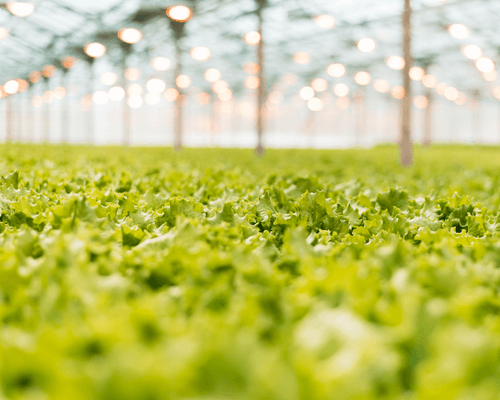
5 benefits of using artificial lighting for plants in a greenhouse
In this article, we summarise the five most important reasons why installing artificial lighting should be considered in[...]