Dutch greenhouse lighting with grow lights for plants2026-09-08T08:15:54+00:00

Greenhouse lighting

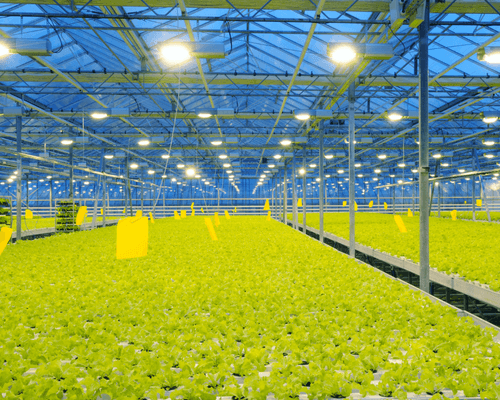
Supplemental lighting is used in greenhouses to promote plant growth, as sunlight throughout the day might not be enough to create an optimal growing environment for the crops. Indoor greenhouse with light is very common. It has been estimated that in the Netherlands, about 2000 ha of glass greenhouses use supplemental lighting for propagation and production purposes.

Light is crucial for greenhouse production, as it provides the energy for crops to perform photosynthesis: the process of converting light into chemical energy for plant growth and fruit forming. Understanding the topic light and plant is therefore crucial.

Using the right grow lights for plants can contribute to improved quality and yield of the final harvested product in Controlled Environment Agriculture (CEA). Understanding which types of plant grow lights are best suited for specific applications can help reduce operational energy costs associated with greenhouse lighting.

Also, knowing which types of plant grow light are the best to use, will help to reduce operational (energy) costs in greenhouse lighting.

Through articles on this website, you will find resources on the importance of lighting for plant growth, background information on wavelength of light for plants, grow lights for plants (differences between HPS lights, led grow lights, full spectrum lighting), short day & long day plants, greenhouse lighting and reasons to install grow lights for indoor plants. On this page, knowledge on the latest research outcomes of interlighting (intra/inter-canopy lighting) and more.

The importance of greenhouse lighting for plant growth

Besides temperature, air humidity and CO₂ concentration in the greenhouse, light is a major environmental factor which affect the production in the greenhouse enormously.

Low light intensity and low amount of light is a major problem and limiting production factor in northern regions in the world, such as Canada and European countries like the Netherlands, Sweden and Finland where there is often not enough sunlight for optimal crop production.

Measurements have shown that inside a greenhouse, the amount of sunlight entering is often 40-50% lower (!) than the outside environment. This reduction occurs due to reflection and absorption of light (photons) by the greenhouse infrastructure and glazing.
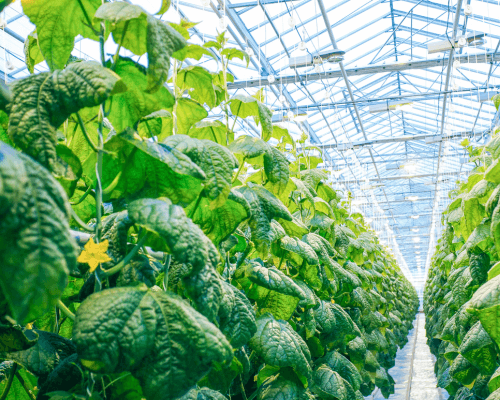
growing Cucumber plants in greenhouse

FAQ about lights for greenhouse

The best type of plant growth light to use for your greenhouse, depends highly on the financial situation and the location of the greenhouse. However, looking at the performances of different available plant growth lights, the best grow light to choose from is currently often LED (Light Emitting Diode) technology. LEDs offer energy efficiency, customizable light spectra, and long lifespans, making them ideal for supporting various stages of plant growth and long term sustainability. 

To light a greenhouse with additional lighting besides sunlight, plant growth lights are used. Plant growth lights emit light that greenhouse crops can use to grow. The plant lights are designed to provide the necessary spectrum of light for promoting plant growth, especially in indoor or controlled environments where natural sunlight may be limited. These plant growing lights are often installed above the plants and to ensure uniform light distribution among the crops, the grow lamps should be installed evenly.

Yes, LED lights are very suitable for greenhouses. They provide energy-efficient, spectrum-tailored lighting, promoting photosynthesis and plant growth. LED technology allows growers to customize light spectra for different crops and growth stages.LED lamps emit less heat than traditional HPS (High Pressure Sodium) lamps, therefore, they can be hung up more closer to plant leafs. Because of this shorter distance to the plant leafs, less light is lost and light can be used more efficiently. 

Currently, two common options are HPS grow lights and LED plant grow lights. Globally, more LED lights for plants are being installed in greenhouses due to their high energy efficiency, low heat emission, and spectrum control. LED plant grow lights provide specific wavelengths of light that plants need for photosynthesis, supporting optimal growth and development. LED lights emit less heat, allowing for more consistent temperatures in greenhouses.

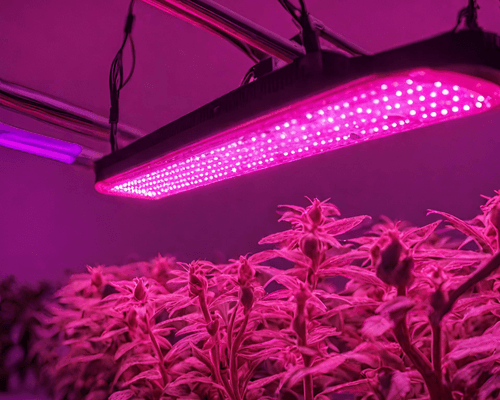
A common question from people visiting greenhouses is: “why do greenhouses use pink lights”? Or even “why do greenhouses use purple lights”? This light combination is used, because plants absorb light most efficiently in the blue and red spectrums. Mixing different amount of red LED light with blue LED light, photosynthesis and enhancing plant growth are enhanced. This combination of red and blue lights, makes the greenhouse look pink or purple (when a higher % of blue light is used, the light in the greenhouse might seem purple).

In the Netherlands, the greenhouse surface is about 10637 hectares (2023) and it is very normal to see large areas of greenhouses in the west-southern part of the Netherlands. We produce flowers, vegetables, fruits, ornamental plants and young trees in greenhouses. The Netherlands has a high concentration of greenhouses due to its cool climate, limited agricultural space, expensive labour, and the necessity for efficient and controlled cultivation to maximize crop yields.

With modern greenhouses, we can achieve high yields whole year round. Greenhouses allow the controlled environment needed for diverse crops, ensuring a consistent and high-quality food supply despite the country’s climate.

Not all LED lights are suitable as plant grow lights. It’s essential to use specifically designed LED plant grow lights that provide the right spectrum of light for photosynthesis, including blue and red wavelengths crucial for plant growth. Using white full-spectrum LED lights for plant growth can be considered an energy inefficient way to grow crops, as not all present wavelengths will be equally utilized by plants.

The best light for growing plants is a plant that provides the right combination of wavelengths which can be used by plants efficiently. Sunlight should always be considered for use first, as it is a renewable energy source and is also completely free.

If sunlight is not enough, then LED grow lights are popular to be used. Their ability to provide a dynamic and changeable spectrum, promotes both vegetative growth and beneficial compounds in plants.

Also, as LED lights emit less heat and use less energy, professional growers prefer to use them. 

Yes, using grow lights will really help plant growth in an indoor or greenhouse environment. Rule of thumb is: 1% more light = 1% more yield. Even a 1% increase in yield can lead to a significant boost in the profitability of greenhouse production.

Using plant lighting to supplement natural light, ensures plants to receive sufficient energy/light for photosynthesis, resulting in healthier and faster growth of plants.

Absolutely, plants can grow really well and survive on grow lights if the lights emit the right spectrum (400-700 nano meters) for photosynthesis.

In a vertical farming, even no sunlight is used to produce crispy lettuce, sweet fruits (such as strawberry) and flavourful herbs. So yes, plants can survive on grow lights and grow well throughout their growth cycle when appropriately used.

The duration of grow light exposure depends on the plant species and growth stage. Continuous lighting (24h) with growth lamps is not needed and when too much light is given or when the photoperiod (length of illumination period) is too long, it can also even negatively affect plant growth.

For tomato production, some Dutch growers choose to illuminate the plants between 16-18 hours per day in combination with sunlight to maximize the yield.

Even though LED lights produce less heat compared to other light sources such as HPL Lights, LED lights will still heat up. When an LED strip is fully lit, it can reach around 60°C. Plants have their own mechanisms to prevent themselves to some extent from getting too hot and burned. However, plants should also be placed at a certain recommended distance (specified by the light manufacturer) to prevent possible damage to the plants.

More often, burn-like symptoms of plants are caused by high light intensity and not the temperature. Tip burn in lettuce and bleaching (in medicinal cannabis) under high light intensity LED grow lights can often occur. This issue especially arises when the lamps are located too close to the plants.

Tip burn in lettuce occurs when the light intensity is too high, and the evapotranspiration rate is too slow. Increased light intensity leads to rapid development, but in this situation, the plant might grow so fast that the roots cannot supply enough calcium for the development of new leaves. Calcium is essential for building cell walls, and when there is insufficient calcium, new cells tend to die. The brown, dead leaves appear as if the leaves are burned.

For medicinal cannabis, oversaturating light can cause bleaching (yellow leafs), where plants receive more light than they can effectively use for photosynthesis. To prevent these issues, it’s crucial to monitor and adjust the distance, intensity, and spectrum of LED grow lights. Only when optimal conditions are created, healthy growth and maximizes yields can be achieved.

Go to Top