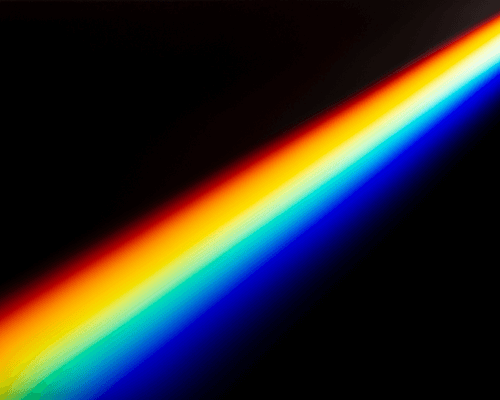
1) Natural illumination with sunlight:
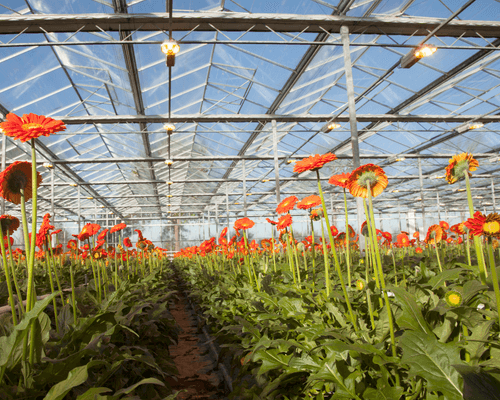
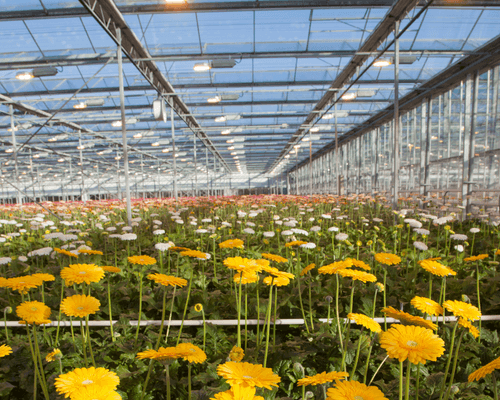
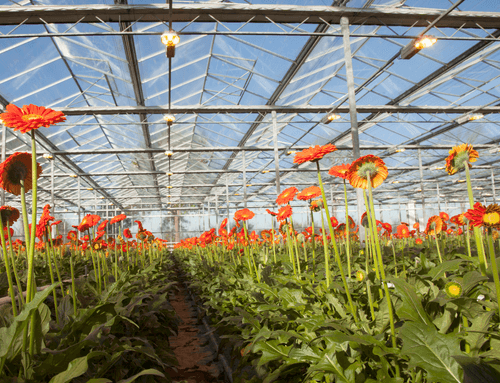
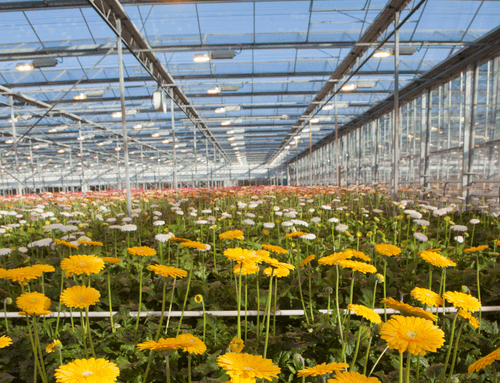
Sunlight is not only the most common used and powerful light source for crop production, as it not only provides a broad spectrum of light essential for plant growth (full spectrum lighting), it is also free.
However, sunlight is not always available in the right amount for crops due to limiting weather conditions (clouds).
About 50% of the light energy from sunlight can be used by plants to drive photosynthesis (the ‘photosynthetically active radiation’).
Because the crops are grown under a certain protective cover (either glass or plastic greenhouse), the cover and construction materials reduce a certain amount of available radiation in the greenhouse.
Overall, the cover and construction materials prevent 20-45% of light from entering the greenhouse, depending on the type of greenhouse.
In the most advanced greenhouses, the structure ‘only blocks 20% of light,’ while plastic greenhouses block up to 45% of light. In the least beneficial situation (plastic greenhouses), the amount of light that can enter a greenhouse and be used by plants is only 23% (0.5 * 0.45 = 0.23).
Advantages of using sunlight in greenhouses:
- Full spectrum of light.
- Cost-effective (it’s free).
- Supports overall plant health.
Disadvantages of using sunlight in greenhouses:
- Limited control over intensity and duration.
- Relies on weather conditions.
- Availability depends on season
Your Content Goes Here
2) High-pressure sodium (HPS) lights:
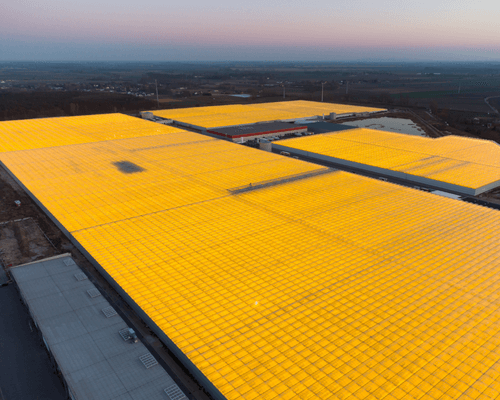
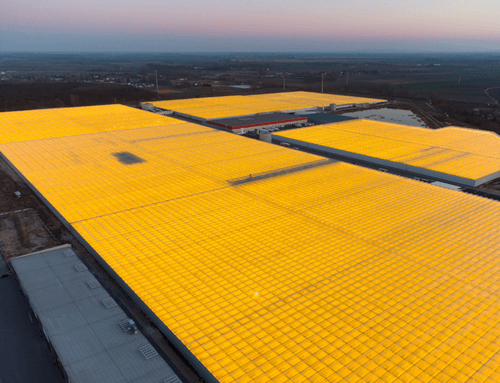
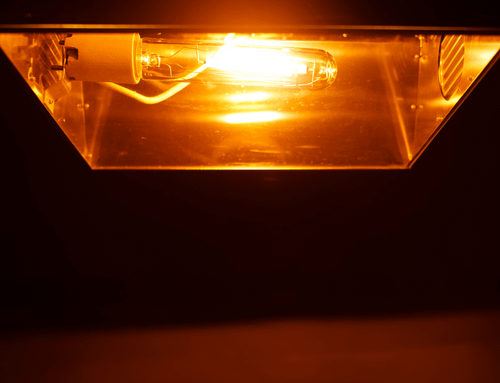
High-Pressure Sodium (HPS) lamps are a widely used type of grow lamp in greenhouses worldwide. They emit a warm spectrum that consists of yellowish-orange colored light, with just a bit of blue light.
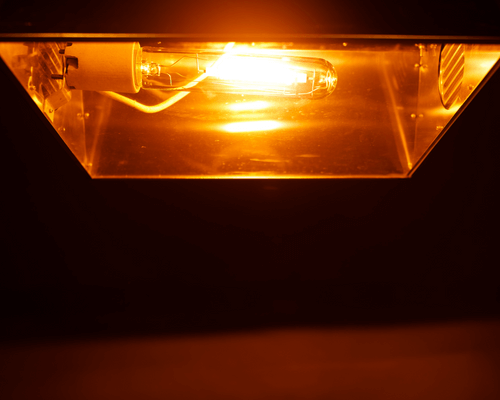
HPS lamps are less efficient compared to LED lights, as a large amount of energy is converted into heat (due to infra-red radiation), actively heating up the greenhouse.
In cold climates, the generated heat of HPS lamps can provide up to 41% of the heat needed for optimal greenhouse production. In this case, HPS lamps are used for both light and heat generation.
In warmer climates, this heat is unfavourable and redundant, as keeping the greenhouse cool is already a significant challenge in hot countries.
A major downside of HPS lamps is that they need to be installed as high as possible in the greenhouse; otherwise, the generated heat will damage the plant. This reduces the efficiency of the lights for crop production. Additionally, HPS lamps use a lot of energy and have only a short life cycle (up to 16,000 hours)
Advantages:
- Lights are cheaper to purchase
- Able to heat up greenhouses (dual purpose grow light)
- Easy to use
Disadvantages
- Limited spectrum
- Generates heat
- Leaf damage if lamps are not installed high enough
- Low life cycle
- High energy usage
3) Metal halide lamps :
Metal halide lamps are known for producing a bright, white light that closely resembles natural sunlight.
Metal halide lamps are a type of high-intensity discharge (HID) lamp that produces light by passing an electric current through a mix of gaseous metal halides (compounds of metals with bromine or iodine).
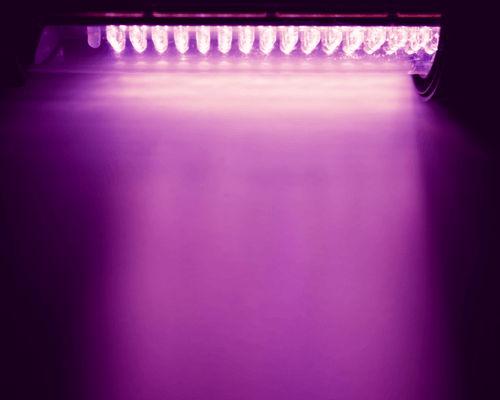
When the lamp is energized, an electric arc is formed within the tube, causing the metal halides to emit light.
Before the introduction of LED lights, metal halide lamps were often used to supplement natural sunlight or provide light during periods of low sunlight, such as in winter or on cloudy days. They emit a broad spectrum of light that includes wavelengths important for photosynthesis.
A problem of metal halide lamps, is that they operated at a high temperature. Also, metal halide lamps form hazard to the environment and plants because they emit a lot of UV radiation. A major limitation of metal halide lamps, is that they are not easily to switch on and off whenever you want. It takes time before they reach full illumination power.
Advantages:
- Balanced spectrum.
- Good for vegetative growth.
- Higher efficiency compared to some alternatives
Disadvantages:
- Less energy-efficient
- Generates heat
- Not easy to turn on and off in a short period of time
- Radiates UV
4) Light Emitting Diodes (LED) grow lights:
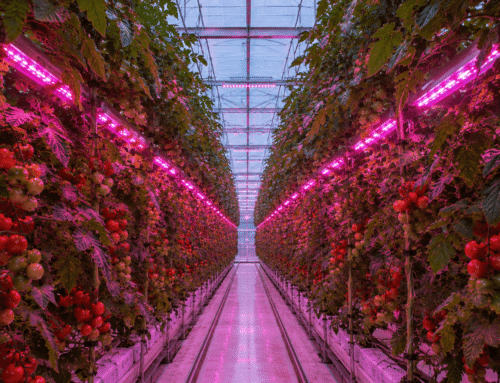
Light Emitting Diodes (LEDs) are a type of semiconductor diode that has gained popularity among commercial greenhouses in the past 10 years as LEDs have become more economically feasible to use.
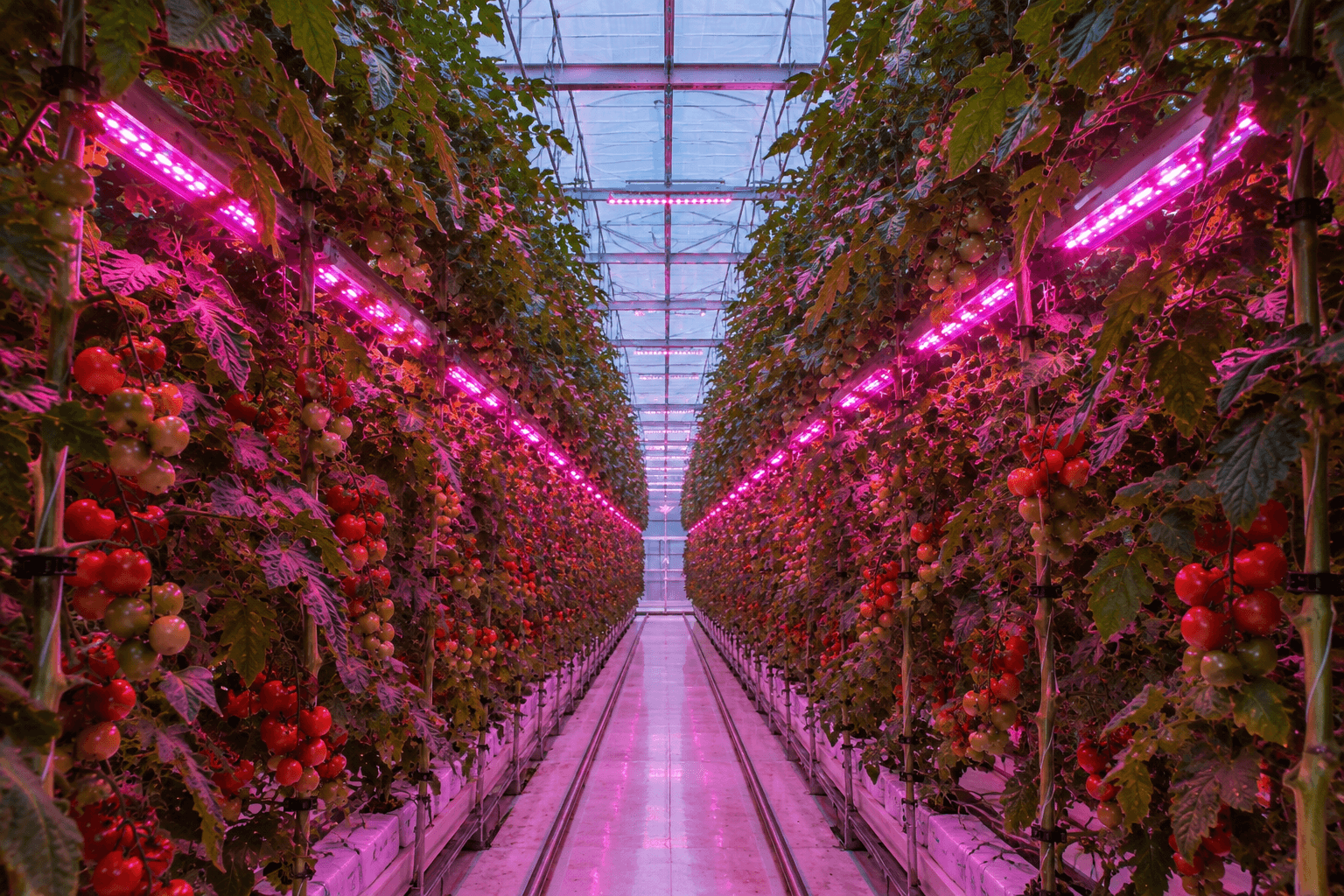
LED growing lights are special because both the spectral composition and light intensity can be precisely controlled. This allows growers to tailor light conditions for different growth stages, helping them regulate plant morphological responses and trigger various physiological processes, such as flowering. Or to boost certain health-beneficial compounds in plants!
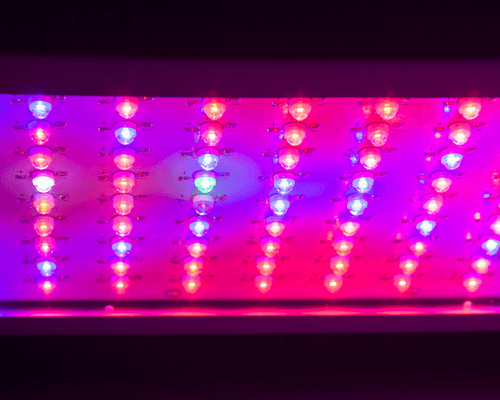
There are many other advantages associated with LED grow lights. The most important reasons for using LED growing lamps in greenhouses are energy efficiency, compact design, long lifespan (up to 50,000 hours), light quality, and low thermal energy generation.
However, compared to HPS lamps, LED grow lights are much more expensive to purchase. The higher capital costs to install an LED lighting system are one of the main reasons why some growers don’t choose LED growing lamps.
But when taking the annual electricity costs into account (LEDs use way less energy than HPS lamps) and considering their longer lifespan, it can be calculated that in the long term, LED growing lights will pay for themselves and are cheaper to use for greenhouse crop production.
Advantages:
- Energy-efficient
- Longer life span
- Customizable spectrum.
- Low heat emission (higher energy use efficiency)
- Flexible in switching on and off
Disadvantages:
- Higher initial purchasing costs
- Can not be used to heat up greenhouses
- Lower coverage area
5) Fluorescent lights for greenhouses:
Before High-pressure sodium (HPS) lamps came on the market in the 1970s, fluorescent lights were mostly used for plant propagation. They were suitable for seedlings and young plants because of their lower light intensity.
General fluorescent lights will soon be banned in the US and the EU with the new rule that was accepted in 2023 by the EU to mitigate greenhouse gas emissions. These lamps might be harder to obtain in the future.
Fluorescent lights are to an extent energy-efficient but cannot provide enough energy during the vegetative and flowering stages of plant growth.
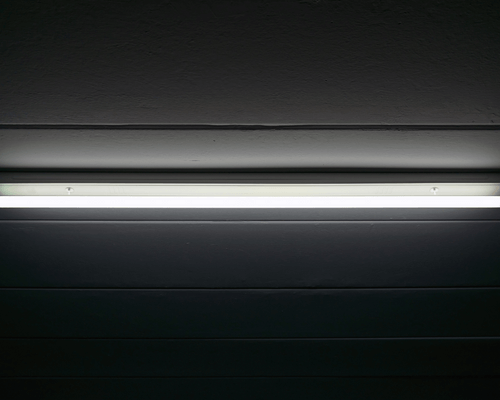
Fluorescent lights are not strong enough to penetrate deep down into the plant. Nowadays, fluorescent lights are mostly used in growth chambers.
Advantages:
- Suitable for seedlings
- Blue-ish light
Disadvantages:
- Reduced accessibility, due to new ban on fluorescent lighting.
- Lower light intensity.
- Limited to specific usages: propagation and germination
Your Content Goes Here
6) Hybrid lighting systems :
Hybrid systems combine different light sources to optimize the benefits of each technology. This approach aims to balance energy efficiency, light spectrum coverage, and heat generation.
A common hybrid lighting system involves combining LED grow lights with HPS lights. This can be done for two reasons: 1) to reduce the installation costs of new LEDs and 2) to compensate for the reduced heat production of LED lights.
For some crops that require heat, LEDs might not produce enough warmth in colder countries like Finland during the winter. So the heat needs to come from an additional heat source.
Advantages:
- Customizable
- Optimal spectrum coverage
- More energy-efficient
- Combining advantages of two plant lighting systems
Disadvantages:
- Requires careful planning for optimal performance
Copy the link of this article in 1 click:
Related Posts
About the Author: Yasmin