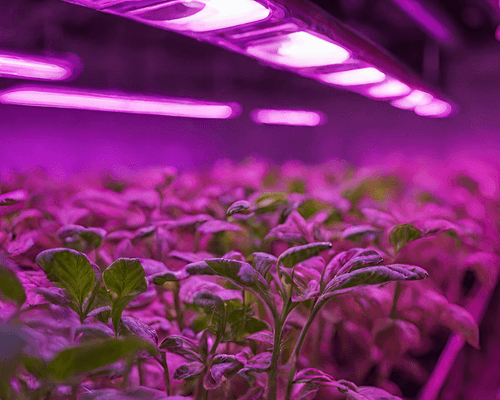
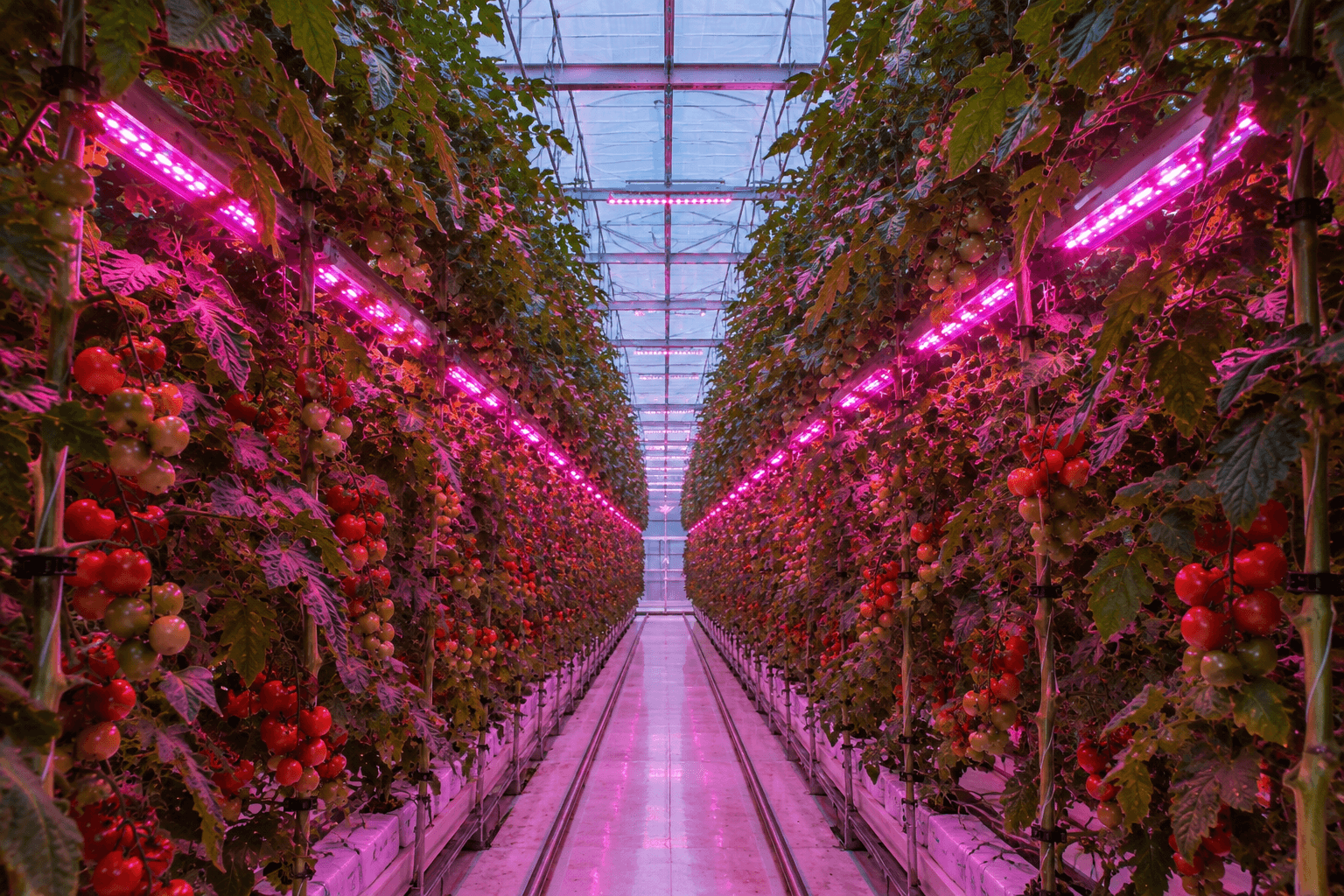
Currently, when grow lamps for supplemental lighting are installed in greenhouses, they are placed above the plants. A proven method to increase plant biomass production and boost the yield of harvestable fruits is to place LED lights between the leaves of plants. This placement of lights within the leaf canopy is also called intracanopy lighting or: interlighting.
Intracanopy lighting: better distribution of light without higher energy costs
A recent study conducted in the Netherlands in 2023 has shown that tomato leaves intercepted 8% more light (higher total light absorption) when combining 50% intracanopy lighting with 50% top lighting with the same amount of applied light, compared to using only top lighting. This lighting strategy increased light absorption by 4%.
When grow lights are placed between the leaves of a (vine) crop is that when the lower leaves receive more light, the total photosynthesis rate of the whole plant will increase significantly, thereby increasing the amount of plant biomass.
Usually, when lights are placed above the crops, the upper leaves will be saturated with light, but the lower and bottom leaves won’t. Due to shading, the lower leaves will only receive a fraction of the total light provided.
By giving the lower leaves more light, they can contribute more to photosynthesis than the saturated upper leaves. The upper leaves, saturated with light, won’t be able to drive photosynthesis further, as the maximum rate has already been achieved.
By placing lights between the rows, the lower leafs which are not saturated with light will benefit enormously from the extra light. Even when the total amount of energy is kept the same with the extra lights between the lights.
Studies found interlighting significantly improved (tomato) yield
In another recent study in 2022, it was found that using 67% top lighting with 33% intracanopy lighting, providing 375 micromoles of light/m², resulted in a 25% higher yield (harvested tomatoes in kg/m²) compared to using 100% 375 micromoles of light/m² top lighting.
Correctly placing lights in the right positions is, therefore, crucial. It is an easy and effective way to significantly increase the yield of harvested products when the initial financial means are available to purchase the grow lights.
Copy the link of this article in 1 click:
Related Posts

About the Author: Yasmin