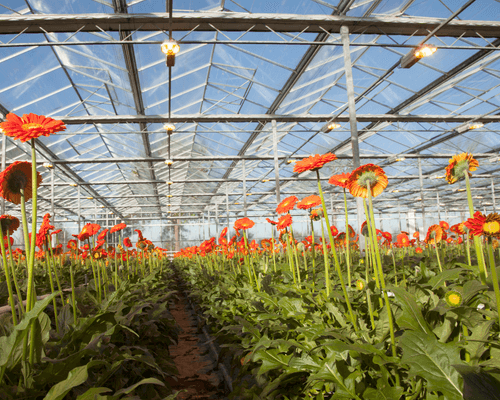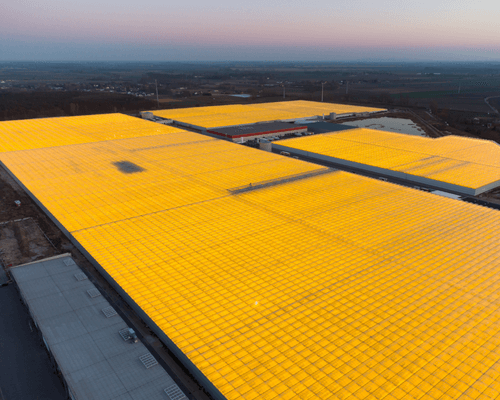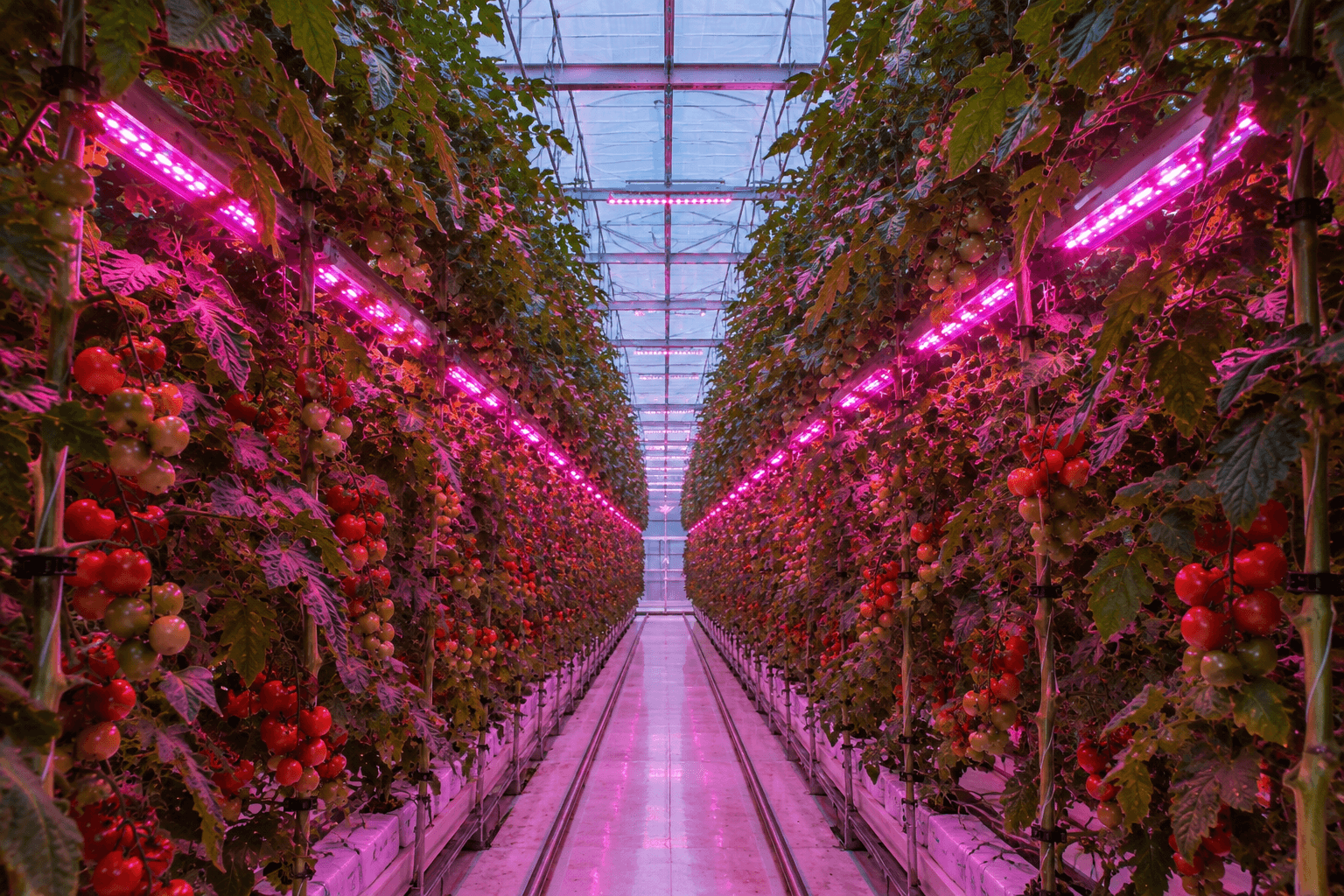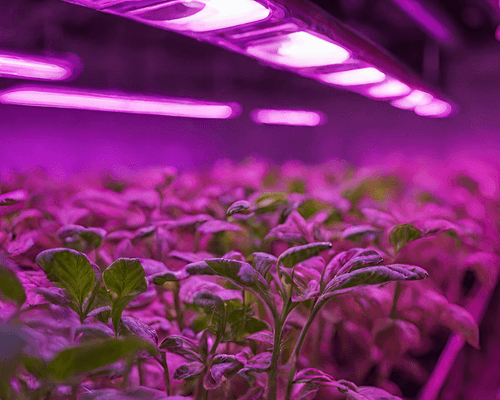
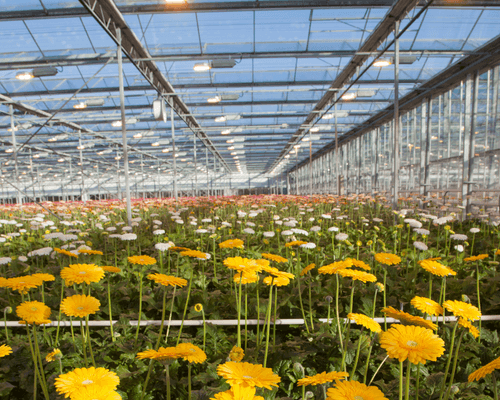
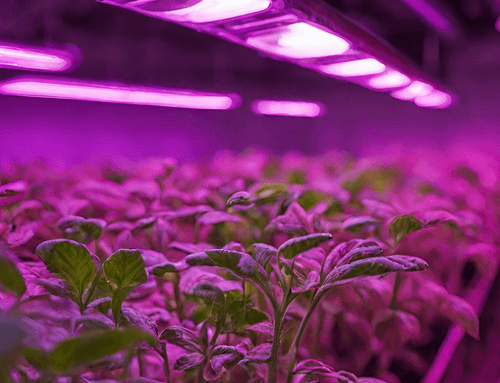
Implementing best practices for greenhouse lighting promotes uniform plant growth and optimizes light conditions for greenhouse crops. Below, we have summarised 3 important factors to consider when installing greenhouse lighting. For efficient growth, remember to regularly monitor the conditions of plant lamps and use light sensors!
1) Uniform light placement:
Even coverage of light:
- Strategically placing lights can ensure uniform light distribution across the entire greenhouse by. What to do: consider the light intensity required for the crops and then adjust the placement.
- Considering using reflective surfaces to enhance light usage. Using white walls and white floors can make sure that more light is absorbed by plants.
Avoiding shadowing and oversaturation
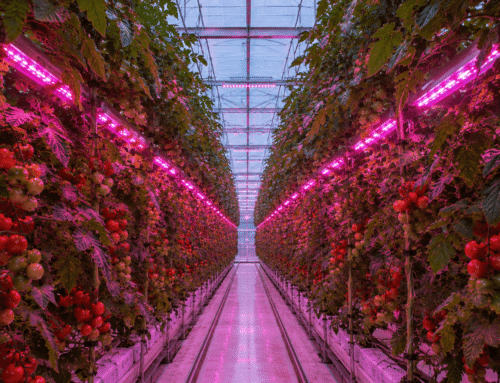
- By placing plant grow lights in a smart way, shading can be avoided as much as possible. When a combination of top lighting and inter-canopy lighting is used, shadowing effects can be reduced and more light will be available to the lower leafs in the plants. Which then can also contribute more to photosynthesis and drive the photosynthesis rate of the whole plant.
2. Lighting duration and intensity:
- Develop based on the greenhouse’s geographical location, seasonal variations, and specific characteristics of the crops, a suitable lighting strategy (for the right amount of light).
- Determine based on the type of crop being grown, a suitable photoperiod (light duration). Optimal day length is important to grow crops optimally. Too much or too little light will reduce the yield enormously, so managing lighting schedules is important.
- Consider providing plants (only) with more lights during critical growth stages or in low-light seasons to boost plant development. When done correctly, energy costs can be reduced enormously.
3. Monitoring and maintenance:
Regular monitoring:
- Pro tip: Invest in light sensors and monitoring technology to track and record light levels accurately. Automated systems can provide real-time data and trigger adjustments based on pre-set parameters.
- Implement a routine monitoring schedule to assess light levels throughout the greenhouse. Regular observations help identify potential issues such as declining light intensity of specific plant lamps or uneven coverage of the plants.
- Also: train staff to visually inspect plants for signs of inadequate lighting and recognizing broken plant lamps to prevent lack of light throughout the season!
Copy the link of this article in 1 click:
Related Posts

About the Author: Yasmin

Passionate about translating scientific knowledge to solve real-life problems, Yasmin is the founder of Dutch Horti Hub and writes regularly about horticulture plant production and latest greenhouse horticulture trends on dutchhortihub.nl. She has a BSc. en MSc. in Plant Sciences from Wageningen University & Research, the leading agriculture university in the world. She specialises in both sustainable crop production and controlled environment agriculture (CEA).