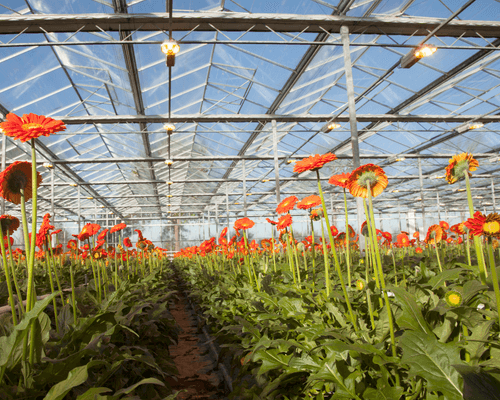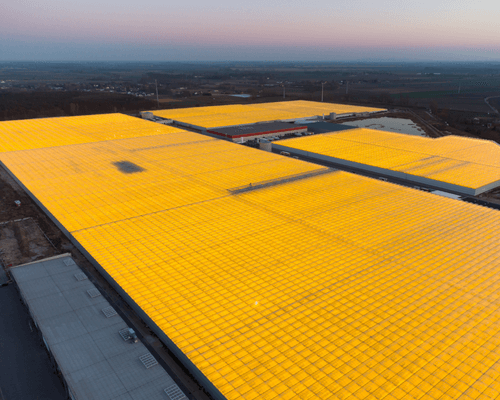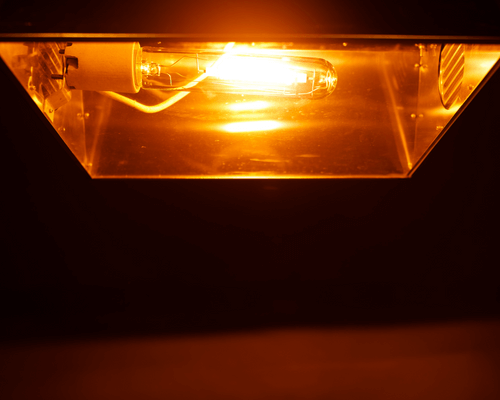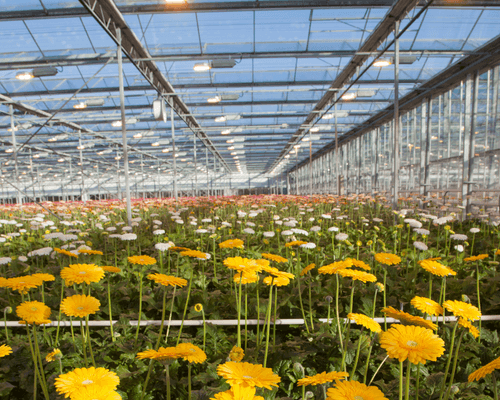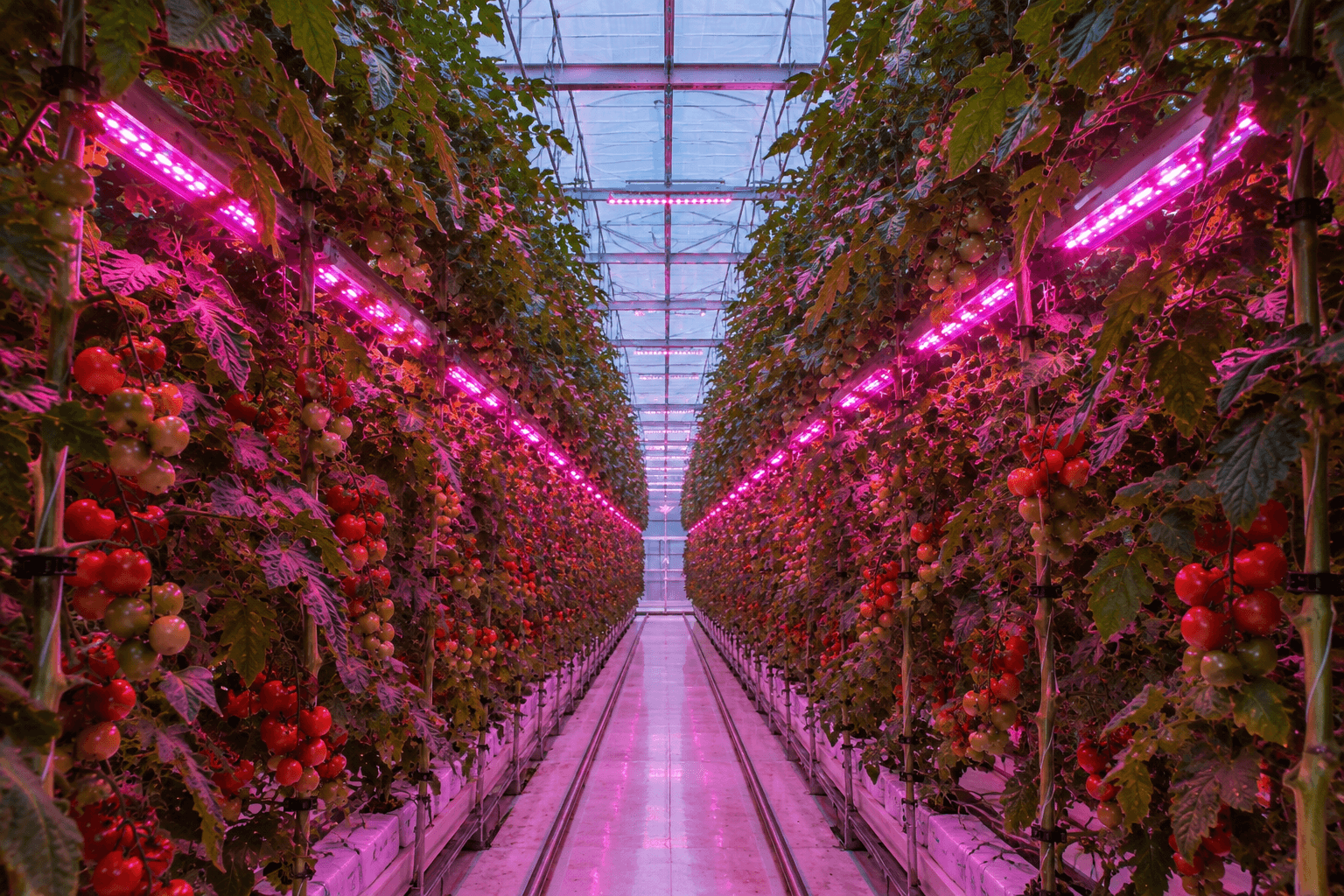
Understanding the light spectrum and wavelengths is crucial for optimizing plant growth. Using the right wavelengths promote plant growth and development.
Photosynthetically Active Radiation (PAR)
To drive photosynthesis, only certain wavelengths of light are used. Plants have pigments that can absorb wavelengths of the “photosynthetically active radiation”(PAR) spectrum, which are 400-700 nm (nano meters).
PAR is the part of the radiation from the sun or artificial lighting (in this case plant grow lights) that the plant can really use for photosynthesis.
Energy of light wavelengths matters
Energy of light wavelengths matters
This light spectrum of 400-700 nm, nearly corresponds with the spectrum that we can see with our human eyes (380 to 700 nm). This spectrum is also called the visible light spectrum. The light at 400 nm can be described as violet and at 700 nm “far red”.
A photon (which can be explained as a light particle which carries a certain amount of energy) of a shorter wavelength than 400 nm (such as UV light), carries too much energy for the plant to be able to use it for photosynthesis.
A surplus of energy carried by a photon can damage cells and plant tissues. Most of the high energy photons found in sunlight are filtered out by our atmosphere. Photons at longer wavelengths (>700 nm) do not participate in driving photosynthesis in plants, because they do not carry enough energy to allow photosynthesis to take place. A rule of thumb: the longer a wavelength, the less energy it has.
Measuring light for plants
The PAR light can be measured in W/m2 (energy of the total radiation) or in µmol/m2/s. Often, in horticulture, µmol/m2/s is more often used. Because this value tells you the amount of light received, by plants. 1 mol = 6.03*10^23 photons. A major advantage of using µmol/m²/s, is that it provides a standardized and consistent way to measure light intensity, regardless of the specific wavelengths (colours) of light being considered.
1% more light = 1% more yield
Besides using the energy of light to drive photosynthesis, plants need light to regulate their internal metabolism, development, direction of growth and creation of certain compounds. For many greenhouse crops, there is a linear relationship between the amount of light intercepted by the leafs and dry mass (plant biomass) production. In fruit vegetable crops (such as tomatoes and cucumber), 1% additional light results in an increase of 0.7-1% in harvestable yield! Supplemental lighting in greenhouses is therefore unmissable in many situations.
Effect of light on plant per wavelength range (nm)
Different wavelengths of light have different effects on the plant.
Based on the research results of Gupta and Jatothu (2013), Singh et al. (2015) and Tian et al. (2014), Ahmed and his colleagues (2020) have summarized the effect of light on plant development and growth per wavelength. Additional information on plant physiological effects per wavelength has been added to this table:
| Wavelength range (in nanometer) | Colour of light | Some of the discovered effect on plant |
|---|---|---|
| 280-400 (High energy) | Ultraviolet |
|
| 400-450 | Violet |
|
| 450-500 | Blue |
|
| 500-570 | Green |
|
| 570-590 | Yellow |
|
| 590-610 | Orange |
|
| 610-700 | Red |
|
| 700-750 | Far red |
|
| >750-1350 | Near infrared |
|
Using red light in greenhouses
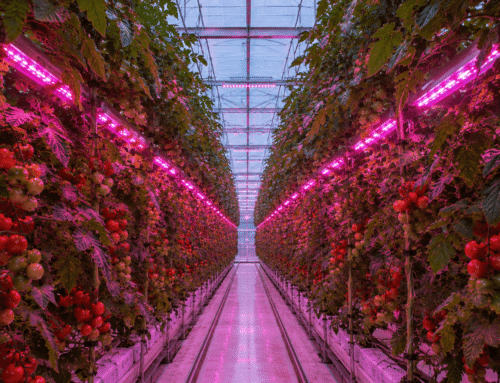
The photons of red light typically have a wavelength between 610-760 nm. Red LED lamps emit red wavelengths at around 660 nm. This wavelength is very close to the absorption peak of the plant pigment chlorophyll. Meaning, a plant can absorb this wavelength very well, using the energy driving photosynthesis.
Red light for seed germination stimulation
Red light is also involved in the regulation of seed germination. Seeds exposed to red light often show higher germination rates. This is because the red light-absorbing form of the phytochrome photoreceptor (phytochrome Pr) is converted to the active form (phytochrome Pfr) under red light, triggering various responses, including germination and flowering.
The red light/far-red light ratio also plays a role in photoperiodic responses, which involve the measurement of day length. This information is crucial for plants to determine the time of year and adjust their growth patterns.
Producing green and healthy leafs with red light
Another very important function of red light on plants, is that it helps the plant to produce healthy and green leaves. This is because red-light is involved in the synthesis of chlorophyll, the green pigment responsible for capturing light during photosynthesis
Mixed plant light colours are needed for optimal plant growth!
Even though red light is very effective at driving photosynthesis, this light spectrum can not be used monotonously. For an optimal plant growth, blue light is needed too.
What is important to realise, is that red horticulture lights (supplemented by blue-rich LED lights) are widely used in greenhouses. Other colours (wavelengths) are only absorbed in a small amount by the plants (but those other wavelengths are not unnecessary per se)!
Also, it is good to know that it is more efficient to give the plants the exact spectrum their pigments can absorb than all the wavelengths. In this way, energy costs can be reduced too. Full spectrum LED grow lights costs more energy than LED grow lights of specific wavelengths.
Effect of blue light on plant growth
Blue light (450-500 nm) regulates stem extension and often inhibits stem elongation for a wide range of crops. The combination of both red and blue wavelength are necessary to produce crops without abnormal stem length.
Blue light affects gas exchange in plants
Blue light regulates the opening and closing of stomata, tiny pores on the surface of leaves. Stomata control gas exchange, allowing carbon dioxide to enter for photosynthesis and oxygen to exit.
Blue light is needed to regulate metabolites in plants
Blue light has been associated with the regulation of secondary metabolite production in plants. These secondary metabolites include compounds such as flavonoids and alkaloids, which play roles in herbivore defence (resulting in the bitter taste of crops) and response to environmental stress, such as an excess of light (by producing more flavonoids/antioxidants).
Far-red light on plant growth
While far-red light itself is less effective in driving photosynthesis compared to shorter wavelengths, it can still contribute to the overall light environment and influence the efficiency of photosynthesis indirectly by influencing plant morphology and structure.
Applying far-red (around 700-800 nm) lighting can initiate earlier flowering in some long-day plants or promote continued growth in the vegetative state (and delay flowering for some species). Far-red light can also influence seed germination.
Currently, far red light is not being considered as Photosynthetic Active Radiation (PAR), because far red on its own doesn’t drive photosynthesis well. However, it has been found that applying far red together with other spectrum of PAR there is a significant increase in photosynthesis activity. This synergy is also called the Emerson Effect.
In the future, more growers might work with Extended Photosynthetically Active Radiation (ePAR).
Stem elongation with far-red
Far-red light is also known to promote stem elongation, a phenomenon known as the “shade avoidance response”. In nature, when plants are shaded by neighbouring vegetation, the reduced ratio of red to far-red light signals competition, and plants respond by elongating their stems to reach for better light conditions.
Far-red light has been associated in the regulation of leaf expansion. It can affect the size and shape of leaves, changing the overall architecture of the plant.
Some closing words:
For plants, light is really important. When designing a greenhouse, it needs to be taken into account whether the plants will receive the appropriate quantity and quality of light.
Copy the link of this article in 1 click:
Related Posts
About the Author: Yasmin