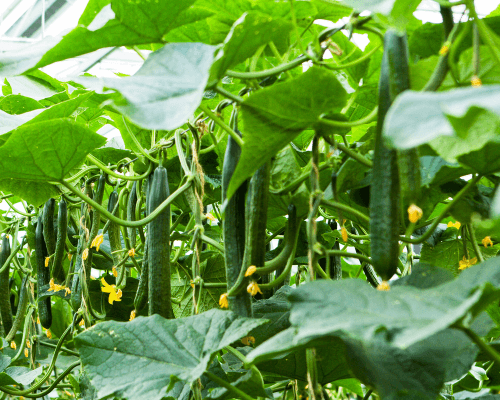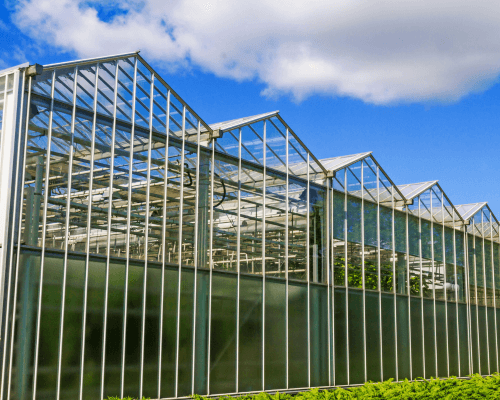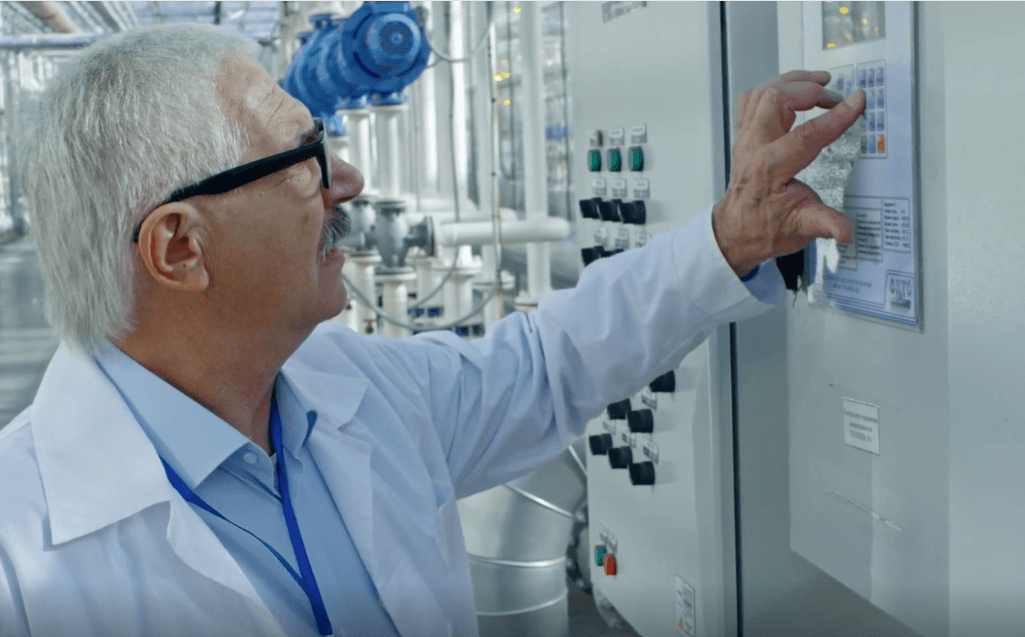
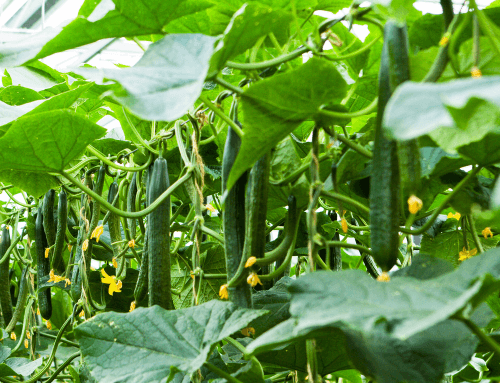
To drive the photosynthesis rate of crops in (high-tech) greenhouses, many growers opt to apply additional CO₂ in the greenhouse, up to about 1000-1200 ppm is given. CO₂ is a crucial element to drive crop photosynthesis and it was found earlier that additional CO₂ application significantly benefits crop growth. Supplying CO₂ in greenhouses can increase the growth rate and yield by 15-30% under the right circumstances.
1. Use a co-generator (in Dutch“warmtekrachtkoppeling”)
Greenhouse CO₂ generators do exist and are used in greenhouses. A cogenerator (also known as: combined heat and power (CHP) (in Dutch: “warmtekrachtkoppeling” (WKK)) in a greenhouse produces CO₂ as a by-product through the combustion of fuel, such as natural gas or biomass, to generate electricity. The exhaust gases containing CO₂ are strategically released into the greenhouse environment, enhancing photosynthesis and promoting accelerated plant growth.
2. Apply CO₂ from industrial sources
Another way to obtain CO₂ in greenhouses is to get CO₂ from nearby industrial facilities, where CO₂ is captured and supplied as a by-product of industrial processes. In the Netherlands, there is a pipeline transporting CO₂ from the Rotterdam harbour to the greenhouses located in Westland. Another way to supply CO₂ in the greenhouses is with external CO₂ tanks. Liquid CO₂ is transported to greenhouses in specialized tanks. This source of CO₂ is then released into the greenhouse atmosphere to support photosynthesis. This source of CO₂ could be relatively expensive to use.
3. Use Liquid CO₂ in tanks
Another way to supply CO₂ in the greenhouses is with external CO₂ tanks. Liquid CO₂ is transported to greenhouses in specialized tanks. This source of CO₂ is then released into the greenhouse atmosphere to support photosynthesis. This source of CO₂ could be relatively expensive to use.
3. Use Liquid CO₂ in tanks
There is a limit of how much additional CO₂ you can apply for extra benefits
Please note that there is a limit of how much CO₂ you can apply to crops in the greenhouses. At 1200 ppm carbon dioxide concentration, saturation responses can occur and might start negatively affecting crop growth as stomata can start to close, reducing the gas exchange which is crucial for photosynthesis.
Copy the link of this article in 1 click:
Related Posts


About the Author: Yasmin