In the context of plant lighting in greenhouses, the terms “efficiency” and “efficacy” are crucial factors to consider when evaluating the performance and cost-effectiveness of lighting systems.
1) Light efficiency
Definition of efficiency in greenhouse horticulture:
Efficiency refers to the ability of a lighting system to convert electrical energy into usable light energy. In the case of plant lights, the goal is to produce light that is most beneficial for plant growth while minimizing wasted energy in the form of heat.
Factors affecting efficiency:
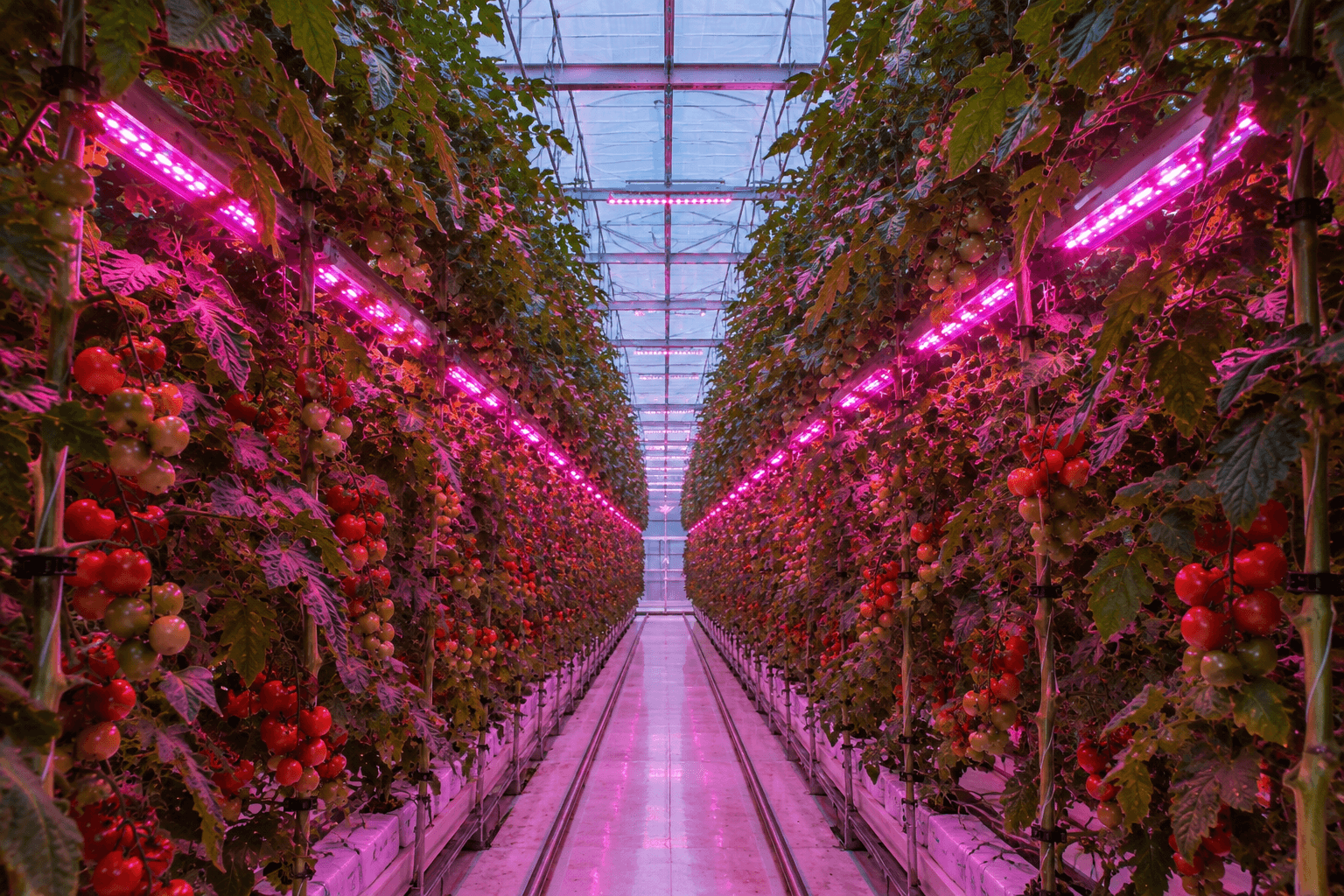
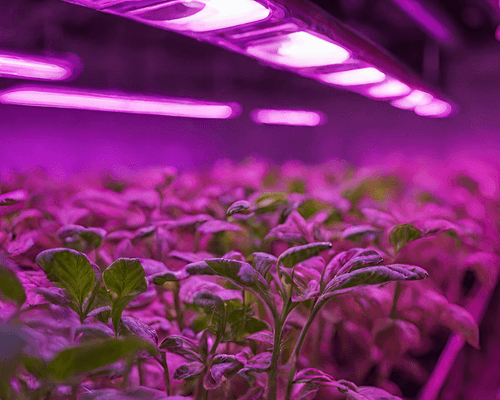
- Energy conversion: High-efficiency lighting systems, such as LEDs, convert a significant portion of electrical energy into photosynthetically active radiation (PAR), which plants use for photosynthesis.
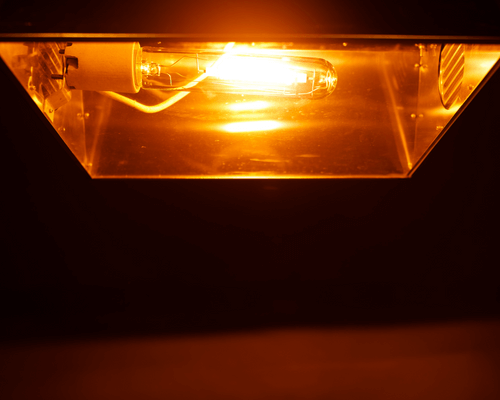
- Heat emission: Less efficient lighting sources, like traditional High Pressure Sodium (HPS) lamps, produce a considerable amount of heat, leading to energy wastage and potentially requiring additional cooling systems in the greenhouse.
Importance in greenhouse lighting:
- High efficiency is critical for greenhouse operations to minimize energy costs and enhance sustainability.
- Efficient lighting systems contribute to a more controlled and stable growing environment by reducing heat stress on plants.
2) Light efficacy
Definition of efficacy in greenhouse horticulture:
Efficacy specifically measures the ability of a lighting system to produce light relevant to plant growth (→ photosynthetically active radiation (PAR)), typically expressed in terms of photosynthetic photon flux (PPF), per unit of electrical power consumed.
Factors affecting efficacy:
- Light spectrum: Efficacy is influenced by the light spectrum emitted by the lighting system. Plants have specific preferences for certain wavelengths of light, and efficacy accounts for how well a plant lighting system aligns with the spectrum that plants can use for photosynthesis.
Importance in greenhouse lighting:
- High efficacy is desirable, as it indicates that more usable light is being provided to the plants per unit of energy consumed.
- Efficacy values are essential for growers to compare different lighting technologies and for them to make informed decisions based on the specific needs of their crops.
Copy the link of this article in 1 click:
Related Posts
About the Author: Yasmin