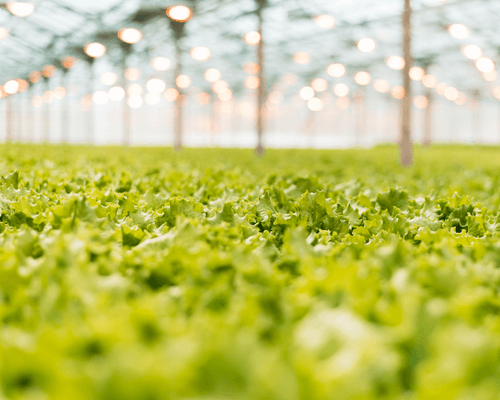
In this article, we summarise the five most important reasons why installing artificial lighting should be considered in a greenhouse.
1) Extend the growing seasons:
1) Extend the growing seasons:
Artificial lighting for plants in greenhouses makes it possible to extend the growing season beyond natural daylight hours. This is especially crucial in regions with shorter day lengths during certain seasons to maintain a day length of 12 hours or longer in greenhouses. By providing additional light, growers can cultivate plants year-round without light limitations, maximizing productivity and profitability.
2) Increased crop yield (“1% extra light = 1% extra yield”):
Greenhouse supplemental lighting enhances photosynthesis, crucial for plant growth and development. A rule of thumb is that with an extra 1% light during the growth season, results in a 1% extra yield.
This boost in light energy leads to increased yields, faster growth rates, and improved overall crop quality. It is particularly beneficial for high-value crops where maximizing yield is a priority or in places where the highest possible yield per m2 must be achieved due to high operation costs.
3) Optimized crop production:
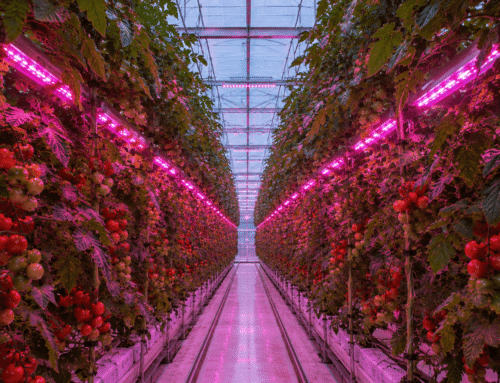
Optimized crop production through greenhouse lighting is achieved by providing plants with controlled and tailored light conditions. Especially with the introduction of easy-to-control LED grow lights, greenhouse growers can customize the light spectrum based on the specific needs of different crops and growth stages.
4) More uniform growth across the greenhouse:
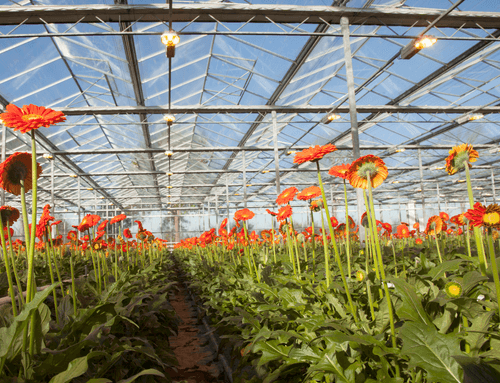
Natural sunlight can be unevenly distributed within a greenhouse due to factors like shading, cloud cover, or the greenhouse structure itself. Artificial lighting helps overcome these challenges by providing uniform and consistent light coverage, resulting in more even growth across the entire greenhouse. This ensures that all plants receive adequate light for optimal development, leading to more similar fruit sizes throughout the growing season.
5) Grow any crop whenever you wish:
Additional lights for plants in combination with an additional heat source when needed throughout the season enable greenhouse growers to cultivate a wider range of crops, including those that may not have been able to grow in local environmental conditions or during specific seasons throughout the year.
Some exotic crops could include growing vanilla in the Netherlands, wasabi in Iceland, and growing bitter gourd in the Netherlands.
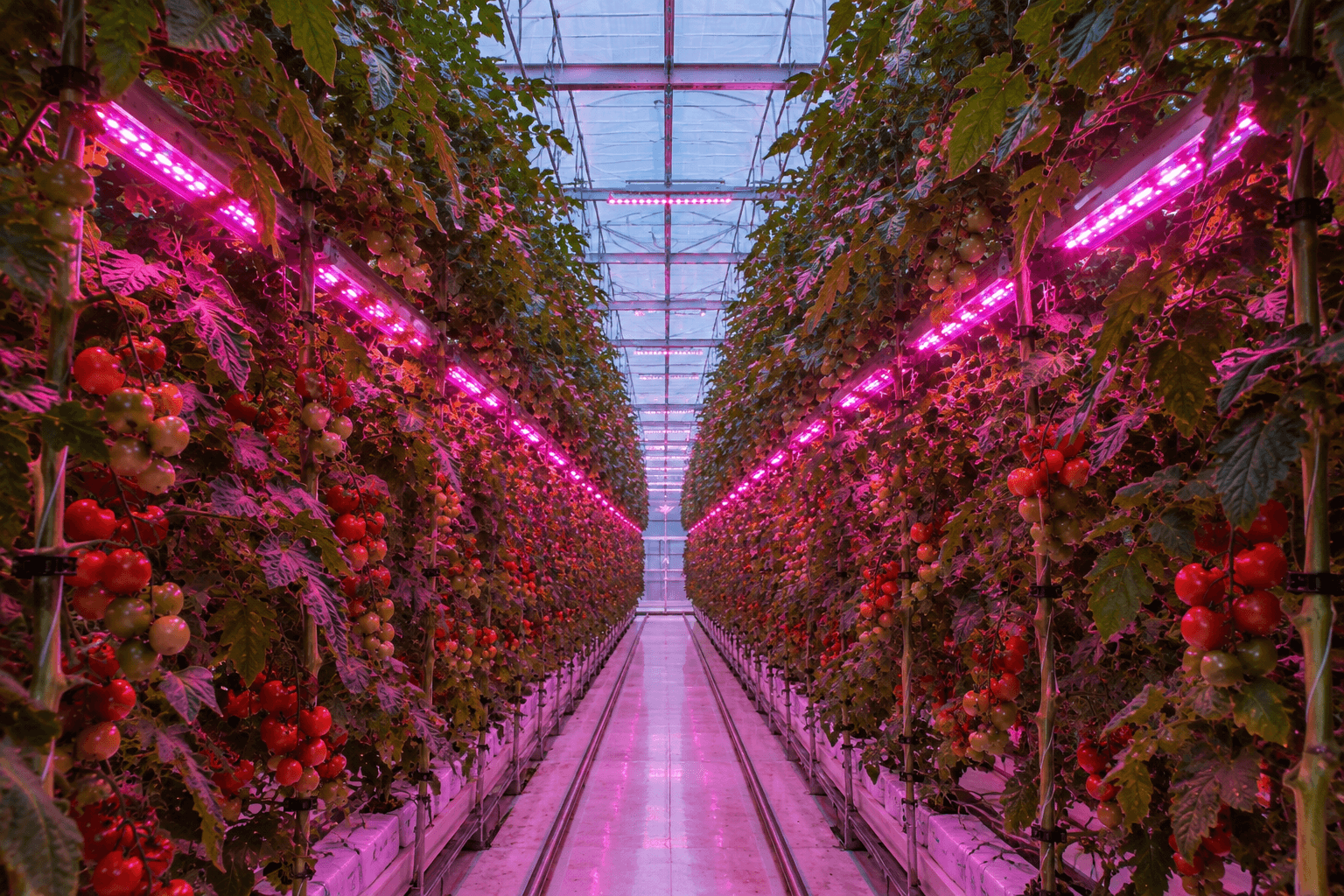
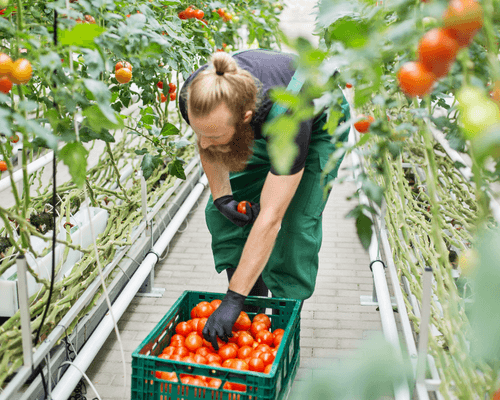
Without indoor plant lights in Dutch greenhouses, producing the number of tomatoes we currently produce throughout the year would not have been possible. Due to our climate conditions, outdoor production of this crop would already have ended by the end of summer due to a lack of light and warmth.
With grow lamps in the greenhouses, harvest can still occur during off-seasons of field crops, and growers can ask a higher price for their produce due to a lack of market availability.
This opens up opportunities for diversification and the cultivation of high-value speciality crops, meeting local and international market demands, and potentially increasing revenue streams.
Copy the link of this article in 1 click:
Related Posts

About the Author: Yasmin