
What Is hydroponics? – introduction to hydroponics
Hydroponics can be defined as a modern agriculture technique to grow plants in a nutrient solution rather than soil. It is a soil-less crop production method.
In agriculture, soil is the most widely used and available medium for growing crops for food production. The term “medium” refers to the material or substance in which plants develop their roots. Soil provides plants with essential nutrients, water, and air to ensure effective growth.
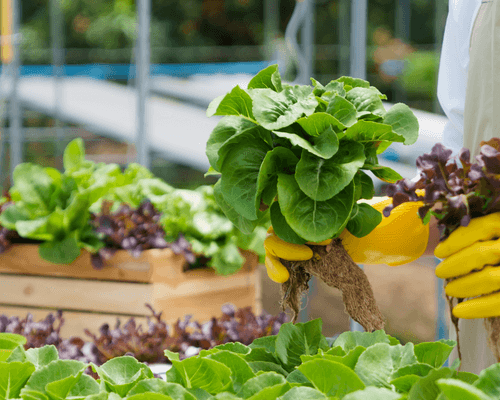
However, in this soil medium, there are also many plant-harming microorganisms such as insects, fungi, and plant diseases (viruses) that can limit the potential growth of plants.
To grow a large quantity of high-quality crops that can be sold at a higher price, a ‘clean’ starting environment (medium) without diseases and insects is important. Unlike traditional soil-based cultivation, hydroponics utilizes a soilless growing environment.
The medium in hydroponics provides support to the plant roots and facilitates the direct delivery of water, nutrients, and oxygen to the root system. The growing medium or substrate is also used to support plant roots and provide stability for the plants in a commercial hydroponic greenhouse. Common hydroponic substrates (hydroponic grow media) include (among others) hydroponic rockwool, hydroponic coconut coir and hydroponic perlite.
How does growing plants in water work? – The principles behind hydroponics
When growing plants in water with hydroponics, the plants grow in a nutrient solution, with their roots partly immersed in the solution.
All the macro and micro nutrients, which are also found in soil, are present in this nutrient solution.
This means that in a hydroponic setting, there is no need for soil at all, which plants normally use to extract nutrients through their roots. Please note that this nutrient solution is not just tap water; it consists of water mixed with a specially made liquid nutrient in a predetermined ratio.
The nutrients required by plants are directly given to them in a hydroponic environment. The plants get what they need in the right proportion and at the right time, resulting in more efficient nutrient uptake.
Hydroponic roots are different
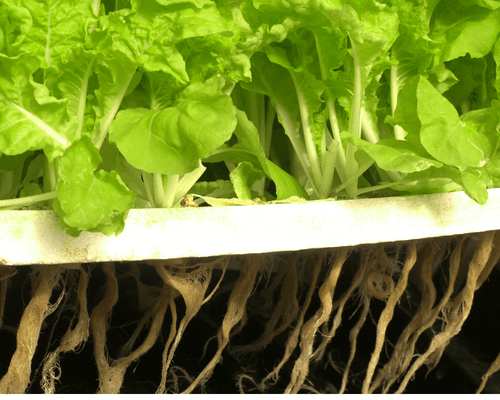
In comparison to the roots of crops growing in soil, hydroponic roots are significantly shorter and thinner, often less extensively developed.
This is advantageous for the plants because less energy is then spent on root development, allowing more energy to be allocated to the growth of leaves and fruit.
The key reason behind why the hydroponic roots are different, is that the roots are consistently surrounded by water with constant feeding of nutrients to the roots, eliminating the need for the plant roots to “search” for water and nutrients.
Copy the link of this article in 1 click:
About the Author: Yasmin