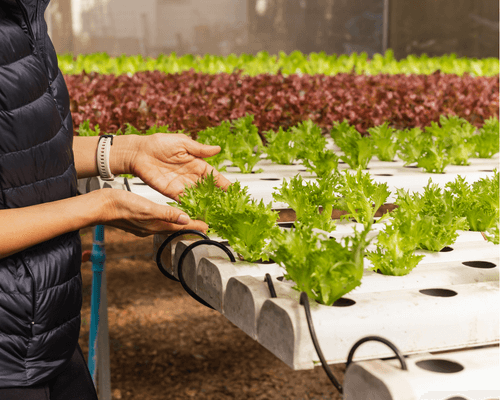
There is not just one fixed type of hydroponic system for greenhouse production, but multiple systems, each differing in mechanism and complexity. If you are thinking to install a hydroponic system in your greenhouse, you might wonder which one you should install. The best hydroponic system to use depends on the scale and purpose of the production system. In addition, the location where you want to grow can also influence the choice of the most suitable system.
In this article, we explain how each of the six hydroponic systems: Deep Water Culture, Wick System, Aeroponics, Nutrient Film Technique (NFT), Ebb & Flow, and Drip System, works, as well as their pros and cons. We hope this will help you make a more informed decision about which system you would like to install.
Click on the tabs below to reach about each system!
Deep Water Culture is considered one of the most straightforward hydroponic cultivation systems in this list.
In a container filled with water and the necessary plant nutrients (minerals), plants are placed in holders where the roots come in contact with the nutrient solution.
The majority of the plant’s roots are submerged in the water, while the plant’s leaves extend above the substrate (rock wool/coco coir/perlite).
Although Deep Water Culture is highly user-friendly, it is essential to ensure an adequate supply of oxygen in the water. This can be done by using an air pump (and diffuser stones in smaller systems) to introduce enough oxygen into the water.
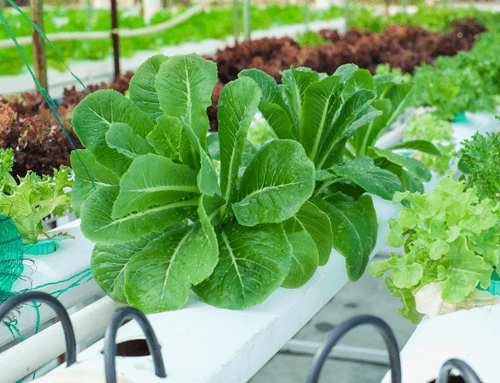
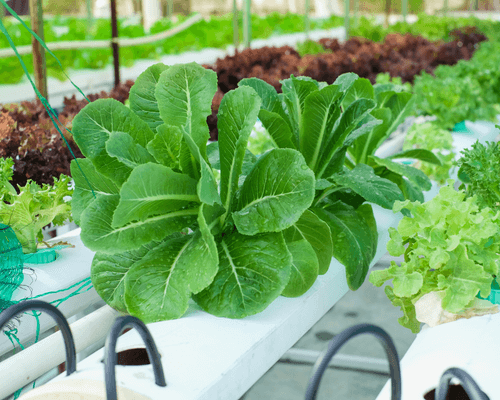
In commercial hydroponic systems in greenhouses, Deep Water Culture is often used for lettuce production, where lettuce is placed on floating plates with their roots hanging in the nutrient solution.
Through the use of a “wick,” (also known as a bundle of fibers), water with nutrients is drawn upward to the roots.
A major advantage of this system is that it does not require electricity for a water pump or an air pump, as natural physical forces take care of the up flow of the nutrient water.
However, a drawback is that this system is not suitable for plants with high water and nutrient demands.
This is primarily because the system cannot deliver a sufficient amount of water to the plants within a short time of period. For plants such as tomatoes with substantial water needs, optimal growth cannot be achieved in this system.
On the other hand, this system is suitable for home-grown herbs and has the added benefit of being energy-efficient.
Fine mist is regularly sprayed onto the roots through the use of very fine sprayers.
The connected water pump circulates water through multiple tubes, and from these tubes, fine misting nozzles provide the roots with nutrients and water.
The spray method in this system results in highly efficient nutrient absorption. Furthermore, since the roots are hanging in the air, they consistently have access to ample oxygen.
The abundance of oxygen in the environment significantly promotes the growth of plants in this system.
The vertical farm company, “Aerofarm”, uses this type of hydroponic system to grow their herbs and microgreens.
A pump pumps the water up and the diagonally placed PVC (Polyvinyl chloride) pipes or steel gutter in which the plants (/growing slabs with the plants on top) are placed, ensure that the water can flow to the lowest point.
Once there, the water returns to the water reservoir via a water pipe.
The nutrient solution flows quietly and uninterruptedly through the tube, and there is always a layer of water available for the roots.
This system also contains a lot of oxygen due to the continuous flow of the water.
The Ebb and Flow system, which is usually also called Flood and Drain system, is a hydroponic system that can be built fairly easily, but above all relatively cheaply.
With this system, the plants are placed next to each other in a large container and the roots receive water periodically when the water level rises before the nutrient solution flows back to the water reservoir again.
In many other hydroponic systems, the roots are nearly continuously surrounded with water/nutrient solution.
In this system, the water only reaches the roots periodically, but the roots still in the nutrient solution several times a day.
This system is a bit like watering plants using a watering can. Instead of refilling the watering can again and again, the water drips from a water reservoir tube.
The hydroponic Drip System is globally widely used and there are two variants: one that is suitable for recirculation and one that is not circulatable.
The circulatable drip system is used in greenhouses or in a closed system. The nutrient solution is then reused and pumped around.
In the non-recirculating variant of the drip system, water is not pumped back to the reservoir. Instead, the water that has already passed the roots is drained. Not recirculating has a significant advantage for the grower because there is no need to consider the nutrient and pH values in the reservoir when recirculating the “used” nutrient solution.
Source:
- Sengupta, A., & Banerjee, H. (2012). Soil-less culture in modern agriculture. World J. Sci. Technol, 2(7), 103-108.
Copy the link of this article in 1 click:
About the Author: Yasmin